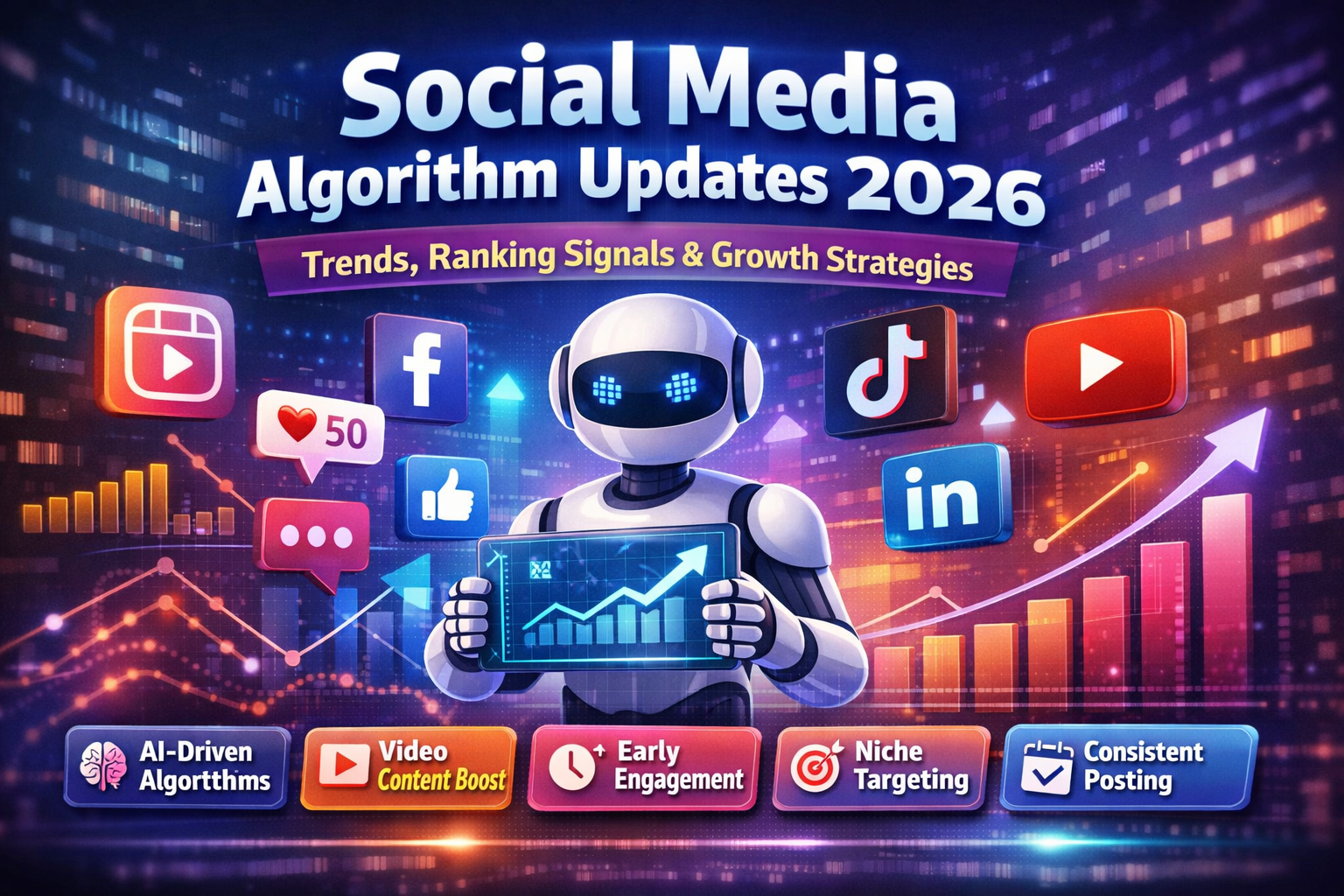
Social Media Algorithm Updates in 2026
Trends, Ranking Signals & Growth Tips
Social media algorithms are evolving faster than ever. In 2026, platforms are no longer simply ranking posts chronologically they are powered by advanced AI systems that analyze behavior, engagement patterns, and content relevance in real time.
For creators, brands, and social media managers, understanding how these algorithms work is essential to increasing reach, engagement, and follower growth.
This guide breaks down the latest social media algorithm updates and the key strategies you can use to improve your visibility across platforms.
How Social Media Algorithms Work in 2026
Modern social media platforms rely heavily on machine learning and predictive AI. These systems analyze thousands of signals to decide what content appears in a user’s feed.
Key algorithm signals include:
Engagement rate (likes, comments, shares, saves)
Watch time for video content
Relevance to user interests
Relationship between creator and viewer
Posting consistency
Early engagement within the first hour
The goal of these algorithms is simple: keep users engaged on the platform for as long as possible.
This means content that generates meaningful interaction is far more likely to be promoted.
Instagram Algorithm Tips for 2026
Instagram continues prioritizing short-form video and interactive content.
Key Ranking Signals
Reels watch time
Comments and shares
Save rate
Direct messages and profile visits
Growth Strategies
Focus on short Reels between 10–20 seconds
Use trending audio and hashtags
Encourage viewers to comment or save the post
Post consistently to maintain algorithm momentum
Content that sparks conversation and emotional reactions performs best on Instagram today.
Facebook Algorithm Changes
Facebook’s algorithm is increasingly focused on meaningful interactions rather than passive engagement.
What Facebook Prioritizes
Comment discussions
Video content
Community engagement in groups
Content shared by friends and family
Facebook Growth Tips
Ask open-ended questions
Share storytelling posts
Encourage discussion in the comments
Post videos that create emotional reactions
Posts that start conversations are more likely to appear in users’ feeds.
X (Twitter) Algorithm Trends
The platform formerly known as Twitter now focuses heavily on topic-based discovery.
Key Signals
Tweet engagement rate
Replies and quote tweets
Posting frequency
Account verification status
Best Growth Practices
Post consistently throughout the day
Create informative threads
Use polls to encourage interaction
Focus on niche topics within your industry
Frequent posting and active conversations help boost algorithm visibility.
TikTok Algorithm Strategy
TikTok still has one of the most powerful content discovery systems online.
Major Ranking Factors
Video completion rate
Replays and watch time
User interactions
Content category relevance
TikTok Growth Tips
Hook viewers within the first 3 seconds
Use trending sounds
Participate in trending challenges
Post frequently to increase algorithm testing
TikTok’s algorithm continuously tests content with small audiences before pushing it to a wider audience.
LinkedIn Algorithm Insights
LinkedIn’s algorithm favors professional value and industry expertise.
Top Ranking Signals
Comments and discussion
Post dwell time
Industry relevance
Creator credibility
LinkedIn Growth Tips
Share insights and tutorials
Post industry analysis
Encourage professional discussion
Maintain consistent posting schedules
Educational content and thought leadership perform best on LinkedIn.
YouTube Algorithm Ranking Factors
YouTube’s recommendation engine focuses heavily on viewer behavior.
Key Metrics
Watch time
Audience retention
Click-through rate (CTR)
Subscriber engagement
YouTube Growth Tips
Optimize thumbnails and titles
Create engaging intros
Encourage viewers to comment and subscribe
Maintain consistent upload schedules
Videos that keep viewers watching longer will always perform better.
Universal Social Media Algorithm Strategies
While each platform has its own ranking system, several core principles apply across all social networks.
1. Prioritize Engagement
Comments, shares, and saves carry more weight than simple likes.
2. Create Video Content
Short-form video continues dominating every major platform.
3. Focus on Niche Audiences
Content tailored to a specific community performs better than generic content.
4. Post Consistently
Consistency signals activity and reliability to the algorithm.
5. Encourage Interaction
Ask questions, start discussions, and invite viewers to respond.
The Future of Social Media Algorithms
Algorithms are rapidly shifting from simple ranking systems to predictive AI models.
Instead of waiting for engagement signals, platforms now attempt to predict which content users will enjoy before they interact with it.
This means the future of social media growth will depend on:
Authentic storytelling
High audience retention
Strong community engagement
Consistent content creation
Creators who understand and adapt to these algorithm changes will have a significant advantage in building their online presence.
Final Thoughts
Social media algorithms are constantly evolving, but their main goal remains the same: deliver engaging content to users.
By focusing on meaningful engagement, consistent posting, and audience-focused content, creators and brands can significantly increase their reach across platforms.
Understanding how algorithms work is no longer optional — it’s a critical part of modern digital marketing and social media growth.