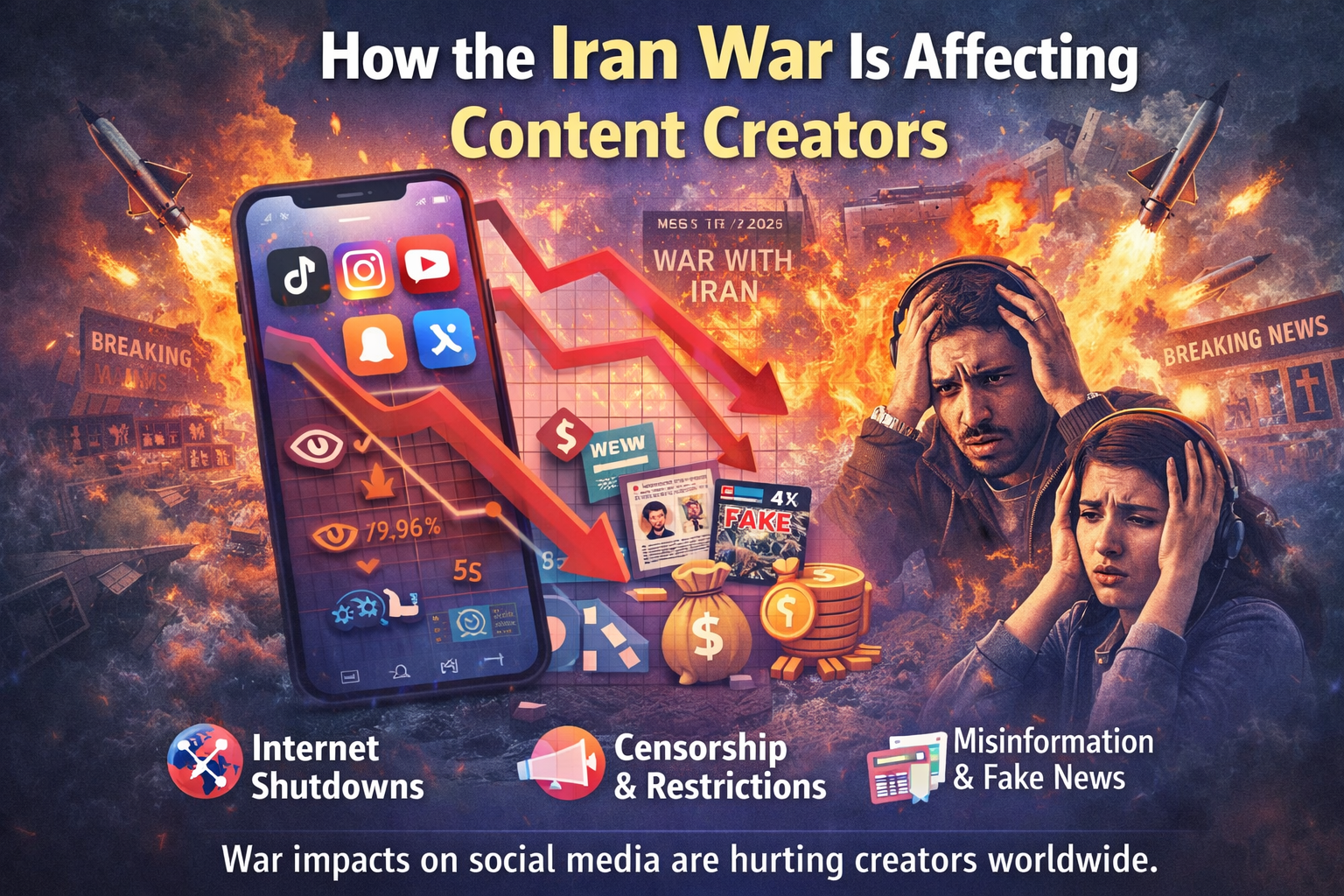
How the Iran War Is Affecting Content Creators
The ongoing conflict involving Iran has created major disruptions across the digital world. From internet shutdowns to misinformation campaigns, the war is significantly affecting content creators, influencers, and social media businesses.
For many creators who depend on online platforms like Instagram, TikTok, and YouTube, the conflict has changed how content spreads, how audiences engage, and even how creators earn revenue.
Internet Shutdowns Are Cutting Off Millions of Creators
One of the biggest impacts of the Iran war is widespread internet restrictions.
Authorities have repeatedly shut down internet access across the country during military conflict and political unrest. In one major shutdown, internet usage in Iran dropped by about 97%, effectively disconnecting millions of people from the global web.
These blackouts prevent creators from:
-
Uploading videos
-
Streaming live content
-
Communicating with audiences
-
Monetizing their platforms
Iran has hundreds of thousands of small businesses and creators who rely heavily on social media platforms like Instagram to reach customers and followers.
When the internet goes offline, their income disappears instantly.
Social Media Monetization Is Collapsing
The war is also affecting creator revenue.
Changes in advertising systems and sanctions have caused many Iranian creators to lose their ability to earn money online.
Some Persian YouTube channels reported that advertising revenue dropped dramatically after updates began detecting VPN traffic coming from Iran, making advertisers avoid those views.
For creators whose income depends entirely on social media platforms, this creates a major financial crisis.
Governments Are Tightening Social Media Restrictions
During wartime, governments often increase control over digital information.
In Iran, authorities have built one of the world’s most tightly controlled internet systems with heavy censorship, filtering technology, and surveillance infrastructure.
These systems can:
-
Block foreign social media platforms
-
Remove content quickly
-
Monitor online activity
-
Restrict creator accounts
For content creators, this means less freedom and more risk when posting online.
The War Is Also Fueling Massive Online Misinformation
Another challenge facing creators is the explosion of fake content related to the conflict.
Recent investigations revealed networks of social media accounts spreading propaganda and AI-generated misinformation related to the war.
These fake posts include:
-
AI-generated war footage
-
Edited images of military attacks
-
Fake breaking-news videos
As misinformation spreads across platforms like Instagram, TikTok and X, it becomes harder for audiences to distinguish real content from manipulated media.
For legitimate creators, this environment makes it difficult to build trust with viewers.
Creators Outside Iran Are Also Being Affected
The conflict is also influencing creators across the Middle East and globally.
Some governments have warned influencers that posting videos of military activity or missile strikes could lead to legal consequences.
These restrictions make creators more cautious about reporting events or documenting what is happening during the conflict.
The Future of Content Creation During Global Conflicts
The Iran war highlights how closely the digital creator economy is tied to global politics.
When wars break out, content creators often face:
-
Internet shutdowns
-
platform restrictions
-
misinformation floods
-
reduced advertising revenue
-
government censorship
Despite these challenges, social media remains one of the most powerful tools for sharing information and documenting events during global crises.
For creators around the world, understanding how geopolitical conflicts affect the internet is becoming increasingly important.
Conclusion
The Iran war is reshaping the digital landscape for content creators.
From internet blackouts and censorship to misinformation and falling monetization, creators face new challenges that go far beyond normal social media algorithms.
As conflicts increasingly play out online, the role of content creators in sharing information—and navigating digital restrictions—will only become more important in the years ahead.