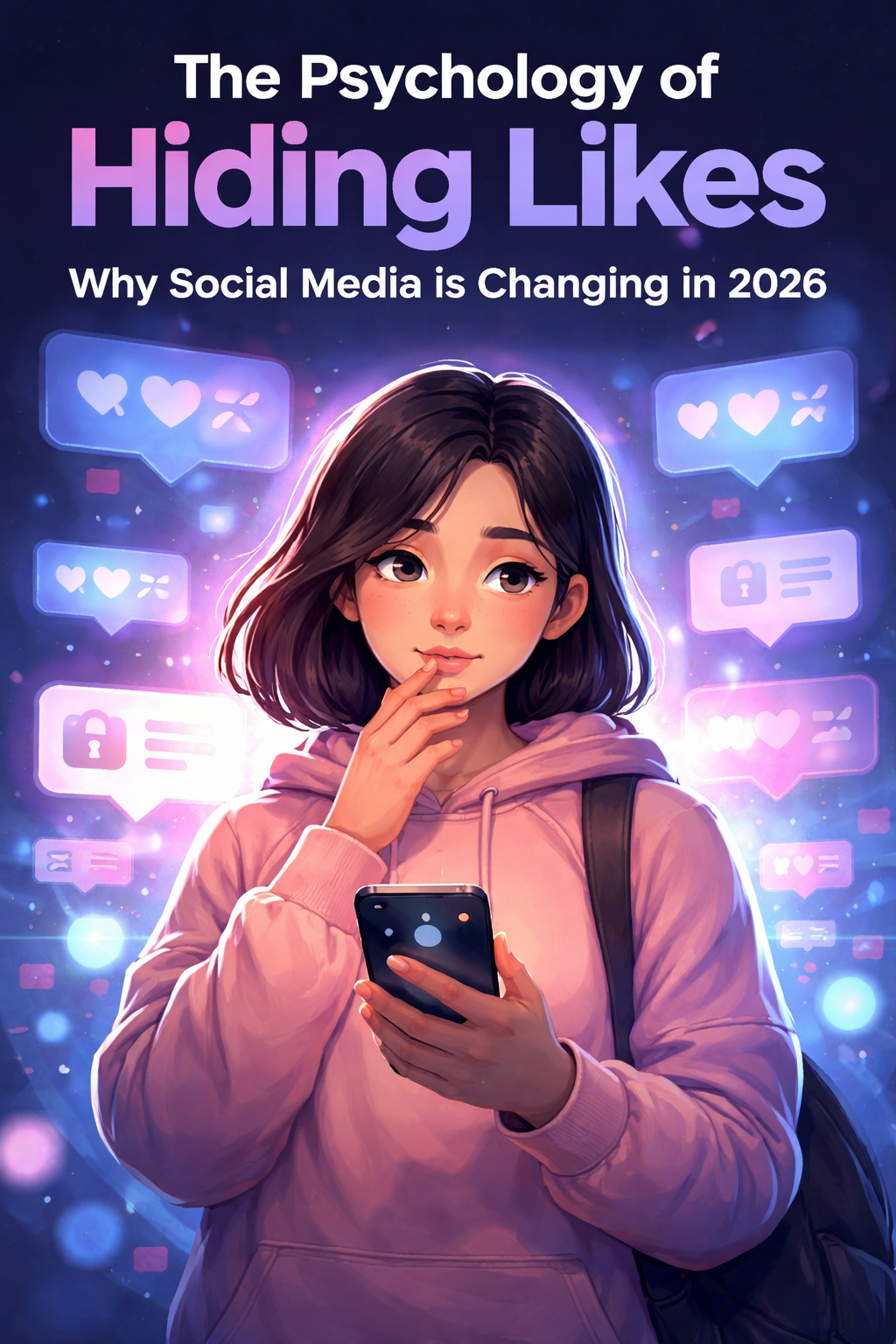
Introduction
Social media in 2026 is undergoing a quiet but powerful transformation. Platforms that once thrived on visible metrics — likes, shares, and follower counts — are shifting toward private engagement systems. The decision to hide likes is not merely cosmetic. It reflects evolving user psychology, platform economics, and algorithmic strategy.
As digital behavior matures and user fatigue increases, visible popularity signals are becoming less central to online interaction. Platforms now prioritize meaningful engagement, mental wellness, and authentic digital ecosystems.
Why Likes Became So Psychologically Powerful
The “like” button evolved into a powerful psychological reward mechanism. Visible likes activate dopamine feedback loops similar to variable reward systems used in gaming design.
- Performance anxiety
- Social comparison pressure
- Addictive notification checking
- Content optimized purely for virality
Users gradually shifted from authentic sharing to algorithm-chasing behavior, reinforcing digital validation cycles and social approval dependency.
Why Platforms Are Hiding Likes in 2026
Mental Health and Digital Wellness
Public engagement metrics intensify comparison culture. Younger demographics especially equate visible likes with self-worth, contributing to anxiety and digital burnout. Hiding likes reduces public scorekeeping and supports healthier usage patterns.
Authentic Content Over Viral Engineering
Visible metrics incentivize trend replication instead of originality. Removing public like counts encourages:
- Story-driven content
- Niche community building
- Value-focused posts
- Authentic creator branding
Algorithmic Control and Platform Economics
Hidden metrics reduce manipulation tactics like engagement pods and artificial boosting. Platforms gain stronger control over AI-driven content distribution and advertising efficiency.
Rise of Private and Intentional Engagement
User behavior is shifting from public broadcasting toward private interaction channels including direct messaging, subscriber communities, and private stories.
The Psychological Impact on Users
Reduced Social Comparison
Content is judged based on relevance and value rather than popularity metrics.
Greater Creative Experimentation
Creators feel safer testing new formats without fear of visible underperformance.
Identity Expression Over Performance
Users shift away from performative posting toward genuine self-expression and community belonging.
Business and Influencer Marketing Impact
Shift Toward Deep Engagement Metrics
- Saves and shares
- Meaningful comments
- Audience retention
- Click-through and conversions
Micro-Influencers Gain Competitive Advantage
Without visible popularity bias, niche creators compete based on trust, specialization, and audience loyalty.
Growth of AI-Driven Content Strategy
Brands increasingly rely on predictive analytics, social listening tools, and behavioral audience modeling rather than surface-level vanity metrics.
The Future of Social Media Metrics
- Invisible follower counts
- Private engagement dashboards
- Reputation-weighted creator scoring
- Blockchain-based audience verification
The visible “like” is evolving into a private feedback signal, reflecting a broader shift toward personalization, privacy, and trust-based digital ecosystems.
Conclusion
Hiding likes is not a removal of engagement but a recalibration of digital interaction. Social media psychology is moving from public validation loops toward private value exchange.
In 2026, digital success is defined less by visible popularity and more by meaningful connection, trusted communities, and authentic influence.