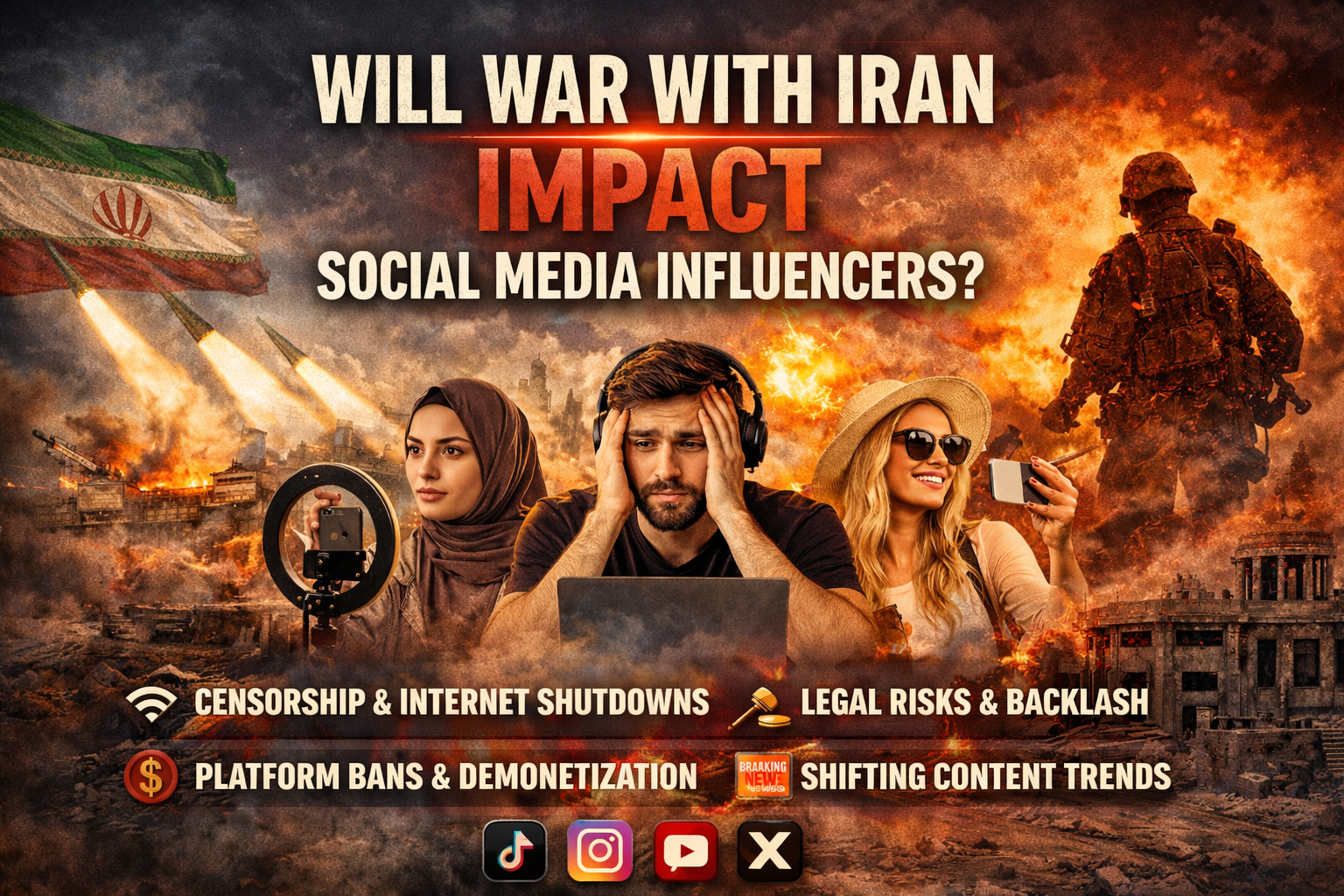
Will a War With Iran Impact Social Media Influencers?
In the age of TikTok, Instagram, and YouTube, wars are no longer only fought on the battlefield. They are also fought online. If tensions or conflict involving Iran escalate, the ripple effects could reach far beyond geopolitics. Social media influencers, digital creators, and online personalities may find their careers unexpectedly affected.
From platform policies to audience sentiment, a conflict involving Iran could reshape how influencers create content, monetize their platforms, and engage with their audiences.
Social Media Becomes Part of the Battlefield
Modern wars increasingly involve information warfare, where governments and organizations attempt to influence public opinion online. Social media platforms become key tools for spreading narratives, propaganda, or counter narratives.
Governments and political actors already use memes, videos, and viral content to shape perceptions of military actions. For influencers, this means their platforms may become politically sensitive spaces. Content creators may face pressure from audiences to speak out or criticism if they stay silent.
Stricter Platform Rules
War also increases concerns about misinformation. Social media companies are tightening rules around war related content, especially AI generated footage or manipulated videos.
Some platforms have begun removing monetization from users who repeatedly post unlabeled AI generated war videos after fake clips of missile strikes spread online.
Influencers who rely on trending topics for views could therefore face risks such as losing monetization, having content removed, or even facing account suspensions.
Creators will need to verify sources and avoid spreading misleading footage.
Legal Risks in Some Countries
In certain regions, discussing war online can also bring legal consequences.
Authorities in some countries have warned influencers that posts about the Iran conflict deemed harmful to national unity or public order could lead to large fines or even prison sentences.
For influencers living in or visiting politically sensitive regions, this means content about war could become legally dangerous.
Audience Backlash and Reputation Damage
War changes audience expectations. Followers often become more sensitive to tone, authenticity, and empathy.
Some influencers have already faced backlash for posting tone deaf content during periods of conflict. Others have been criticized for continuing to showcase luxury lifestyles while serious global events are unfolding.
At the same time, influencers who suddenly jump into political commentary without proper knowledge may also face criticism from viewers.
Content Shifts From Lifestyle to News
When conflict spreads to regions popular with influencers, content often shifts dramatically.
In cities known for luxury influencer culture, some creators have moved from lifestyle content to documenting events, sharing safety information, or correcting misinformation online.
This shows how quickly influencers may transform into citizen journalists, real time commentators, or fact checkers.
However, this also raises ethical questions about whether war coverage by influencers risks turning real tragedies into online content.
Internet Shutdowns and Connectivity Issues
Another major impact is technical. Governments involved in conflict may restrict internet access to control information.
Large scale internet shutdowns can reduce connectivity to only a small fraction of normal traffic during political crises.
For influencers in affected regions, this can mean inability to post content, loss of income, and difficulty communicating with audiences.
Entire digital ecosystems can temporarily collapse.
The Rise of War Content
Ironically, conflict can also generate massive engagement online. War related content often trends globally as audiences search for updates, explanations, and emotional commentary.
Influencers who focus on geopolitics, news commentary, or military analysis may see rapid growth in views and followers.
However, creators chasing views by exaggerating or dramatizing events risk spreading misinformation and damaging their credibility.
Final Thoughts
A war involving Iran would not just reshape geopolitics. It could reshape the entire social media ecosystem.
Influencers may face stricter platform regulations, legal risks depending on location, audience scrutiny and backlash, internet disruptions, and growing pressure to comment on global issues.
For creators, the key challenge will be balancing relevance, responsibility, and authenticity in a digital landscape where global conflict increasingly unfolds on the same platforms used for entertainment.