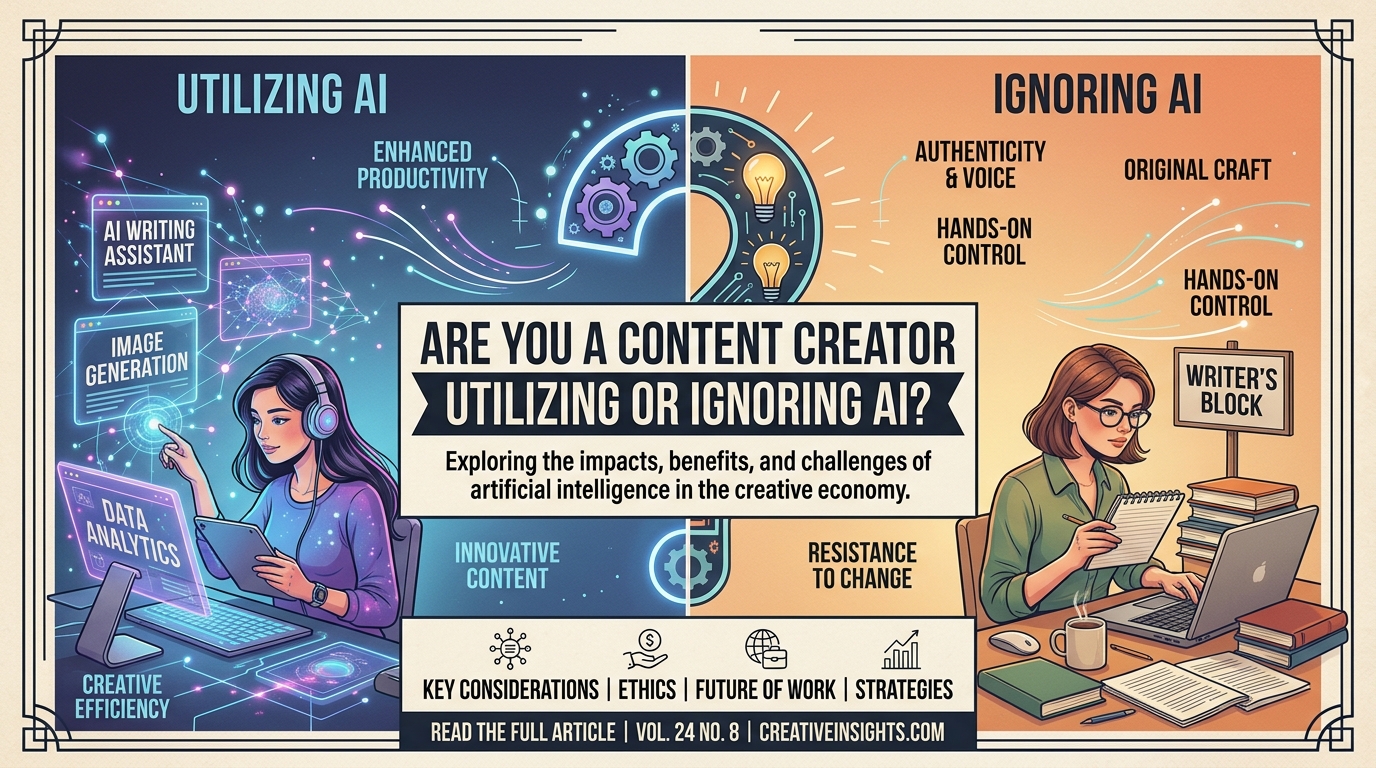
Are You a Content Creator Utilizing or Ignoring AI?
Artificial intelligence has moved from experimental labs to everyday workstations. In 2026, the gap between creators who integrate AI and those who shy away from it is widening—not just in output volume, but in creative flexibility, audience engagement, and revenue potential. This guide helps you decide where you stand, clarifies common myths, and offers a step‑by‑step plan to make AI a reliable partner rather than a mysterious black box.
Understanding AI in Content Creation
AI today is a collection of tools that automate repetitive tasks, suggest creative directions, and even generate original assets. From text generators that draft outlines to video‑editing assistants that splice clips in seconds, the technology is designed to augment human imagination, not replace it. The key is recognizing the difference between automation (speeding up a known process) and generation (producing new material based on patterns).
Automation vs. Generation
Automation handles predictable work: formatting captions, resizing images, scheduling posts, or transcribing audio. Generation creates drafts, mood boards, or music loops based on prompts you provide. Both require human oversight to keep tone, brand voice, and ethical standards intact.
Benefits of Embracing AI
When used wisely, AI delivers three core advantages:
- Speed: Tasks that once took hours can be completed in minutes, freeing you for higher‑level strategy.
- Consistency: Templates and style guides enforced by AI reduce accidental brand drift.
- Exploration: AI can surface ideas you might never have considered, expanding your creative palette.
These benefits translate into more frequent posting, higher audience retention, and the ability to experiment without the fear of wasted effort.
Common Misconceptions and Risks
Even seasoned creators hesitate because of perceived drawbacks. Below are the most frequent concerns and practical ways to mitigate them.
“AI makes my work feel generic.”
Generic output often results from vague prompts. The more specific you are—tone, audience, format—the more tailored the AI response. Treat AI as a collaborator that needs clear direction, just like a human assistant.
“I’ll lose my authentic voice.”
Authenticity is a human trait, not a data point. Use AI to draft, then edit ruthlessly. Keep a personal “voice checklist” (e.g., preferred phrasing, humor style) and compare AI drafts against it before publishing.
“AI tools are too expensive.”
Many powerful AI services now offer freemium tiers or pay‑as‑you‑go pricing. Start with free versions, evaluate ROI, and upgrade only when the time saved outweighs the cost.
Practical Steps to Integrate AI
Transitioning from “no AI” to “AI‑enhanced” doesn’t require a full overhaul. Follow this incremental roadmap:
- Audit Your Workflow: List repetitive tasks (caption writing, thumbnail creation, keyword research). Identify the top three that consume the most time.
- Choose a Starter Tool: Pick one AI solution that addresses the highest‑impact task. For example, a text‑generation assistant for captions.
- Set Prompt Standards: Draft a template that includes audience, tone, length, and call‑to‑action. Save it for reuse.
- Run a Pilot: Produce ten pieces using the AI tool, then compare engagement metrics and personal satisfaction against non‑AI pieces.
- Iterate: Refine prompts, adjust tool settings, and expand to the next task on your audit list.
By the end of the pilot, you’ll have concrete data on time saved and any quality gaps that need human polishing.
Tools to Consider in 2026
Below is a non‑exhaustive list of AI services that have proven useful for creators across mediums. All offer free trials or tiered pricing.
- Text & Script: Jasper, Copy.ai, Writesonic – generate outlines, video scripts, and social captions.
- Visual Design: Midjourney, DALL·E 3, Canva AI – create custom graphics, thumbnails, and concept art.
- Video Editing: Runway, Descript Overdub – automate cuts, add AI‑generated voiceovers, and create subtitles.
- Audio & Music: Soundraw, AIVA – compose royalty‑free background tracks tailored to mood.
- Analytics & SEO: Surfer SEO, MarketMuse – suggest keywords, content gaps, and structure recommendations.
When selecting a tool, prioritize integration with your existing platforms (e.g., direct export to YouTube or Instagram) and the ability to retain full ownership of generated assets.
Maintaining Authenticity While Using AI
Authenticity is the cornerstone of creator trust. Here are three habits that keep your voice intact:
- Human Review Loop: Always read, edit, and personalize AI drafts before publishing.
- Transparency (When Appropriate): If AI contributes significantly to a piece, consider a brief disclosure—many audiences appreciate honesty.
- Personal Signature Elements: Keep recurring motifs (catchphrases, visual styles) that only you use; AI can help replicate them but cannot originate them without your input.
FAQ
Do I need technical skills to use AI tools?
Most modern AI services are built for non‑technical users. A basic understanding of prompt crafting and platform navigation is enough to start.
Can AI replace a professional editor or designer?
No. AI excels at speed and variation, but nuanced storytelling, brand strategy, and high‑level design concepts still benefit from human expertise.
How do I protect my intellectual property when using AI?
Choose tools that grant you full rights to generated content. Review the service’s terms of use, and keep original prompts and final edited versions in your own archives.
What’s the best way to avoid AI burnout?
Set clear boundaries: allocate specific time blocks for AI‑assisted work, and reserve separate periods for pure creative brainstorming without any digital assistance.
Will AI make my niche obsolete?
Unlikely. AI amplifies niche expertise by handling the mechanics, allowing you to double down on the unique perspective that only you can provide.
Whether you’re already experimenting with AI or still skeptical, the decision isn’t binary. Treat AI as a toolbox—pick the right instrument for each job, and you’ll stay competitive, authentic, and efficient in 2026 and beyond.