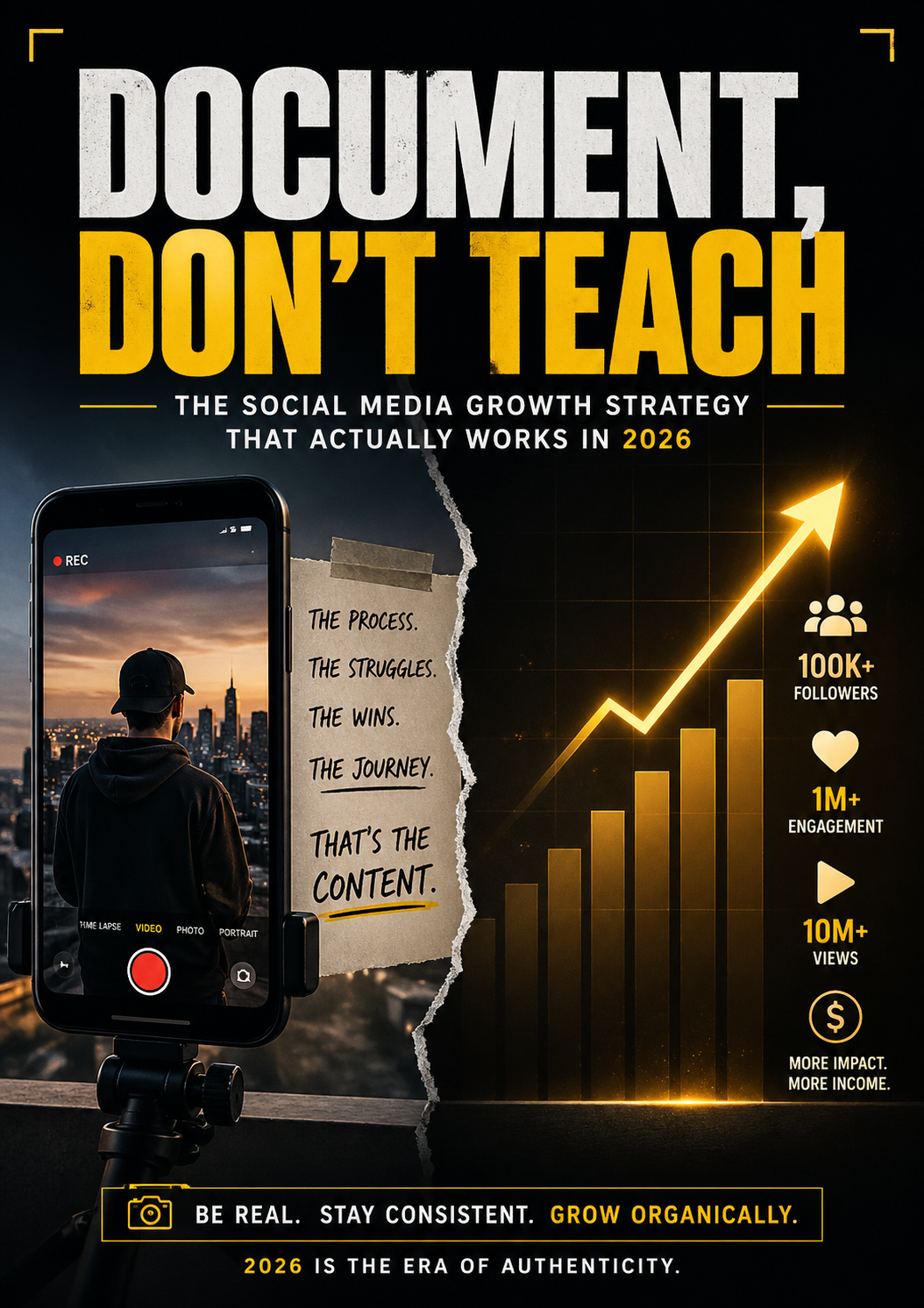
Social media has changed. People are no longer impressed by polished advice or generic “how-to” content. In 2026, the creators who grow the fastest are not the ones teaching — they are the ones documenting.
What “Document, Don’t Teach” Really Means
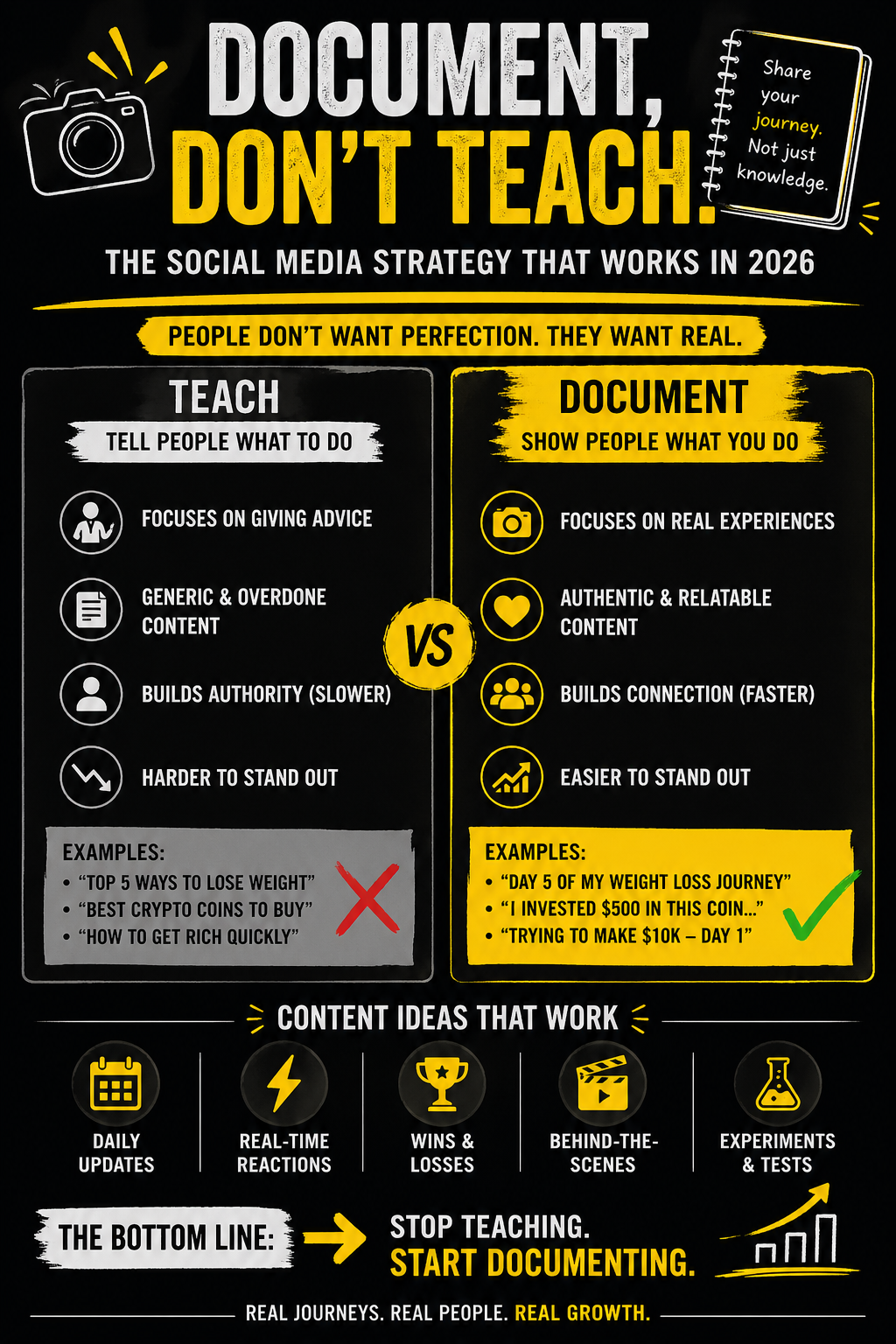
“Document, don’t teach” is a content strategy where you share your real experiences instead of positioning yourself as an expert. Instead of telling people what to do, you show them what you are doing — and what happens as a result.
This approach focuses on authenticity, real-time updates, and personal storytelling rather than structured lessons or tutorials.
Why Teaching Content Is Losing Effectiveness
Social media is saturated with advice. Every niche is filled with creators sharing similar tips, strategies, and “top 5” lists. As a result, audiences have become more skeptical and selective.
Content that feels repetitive or overly polished often gets ignored, regardless of how valuable the information may be.
Why Documenting Works Better
Documenting stands out because it feels real. It shows process, uncertainty, and honest results — something audiences trust more than perfect explanations.
- Builds authenticity and trust
- Creates emotional connection
- Encourages audience curiosity
- Makes your content unique to you
Teaching vs Documenting
The difference between teaching and documenting is simple but powerful:
- Teaching = “Here’s how to do this”
- Documenting = “I tried this, here’s what happened”
The second approach naturally creates a story, making the content more engaging and relatable.
Types of Content That Work with This Strategy
Creators using the documenting approach often rely on simple but effective formats:
- Daily progress updates (e.g. “Day 5 of my journey”)
- Real-time reactions and thoughts
- Wins and failures shared openly
- Behind-the-scenes content
- Experiments and challenges
These formats create consistency and give audiences a reason to come back.
The Role of Storytelling in Growth
Documenting naturally introduces storytelling into your content. Instead of isolated posts, your content becomes a continuous narrative.
People are more likely to follow accounts when they feel invested in the journey, not just consuming information.
Common Mistakes to Avoid
While documenting is powerful, it still requires structure and intention.
- Posting updates without a clear hook
- Making content too long or unfocused
- Trying to appear overly polished
- Not sharing real challenges or failures
Conclusion
In today’s attention-driven environment, growth is no longer about who teaches the most — it’s about who connects the most. Documenting your journey allows you to stand out, build trust, and create content that people genuinely want to follow.
Instead of trying to sound like an expert, start sharing your real experiences. That shift alone can change how your content performs.