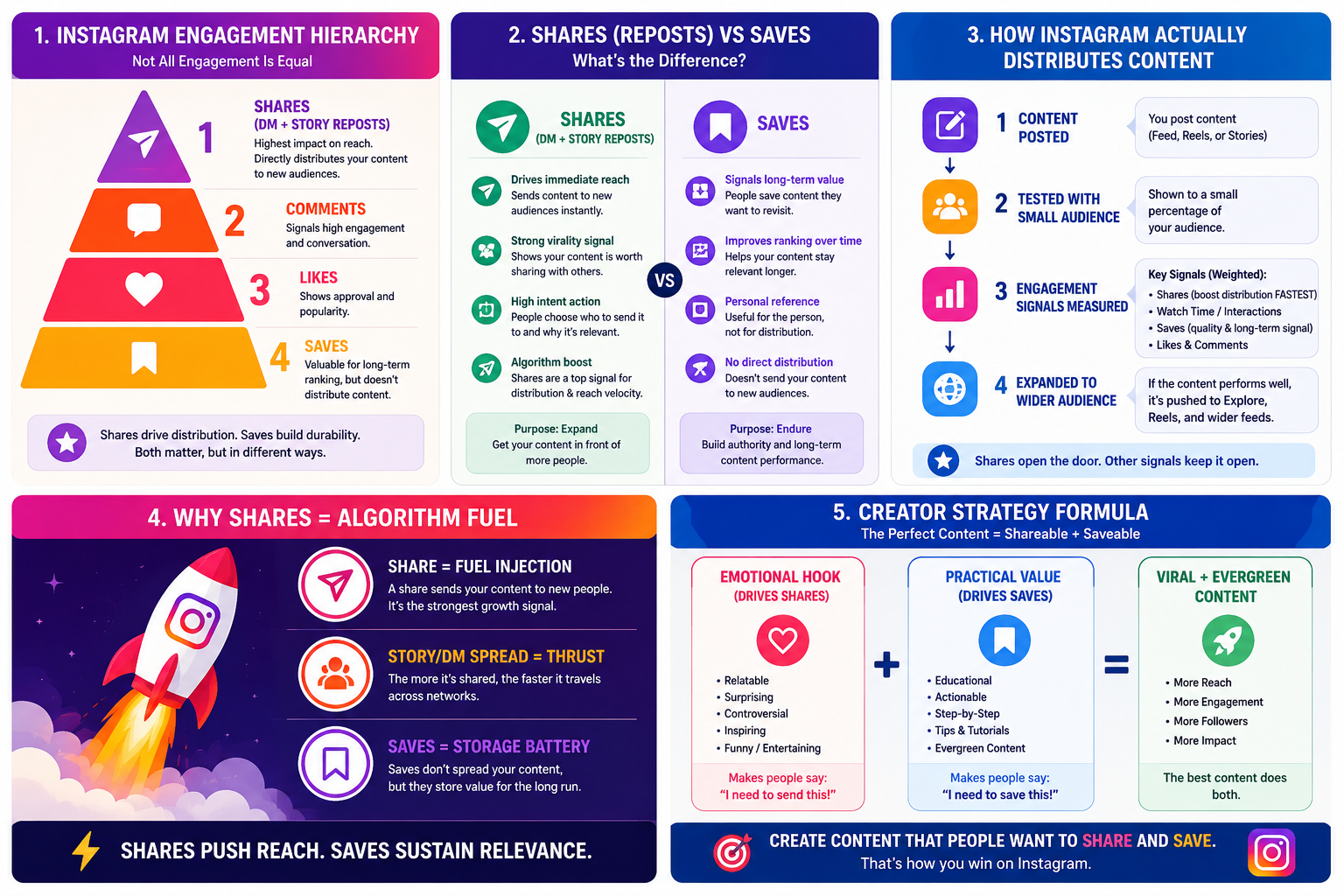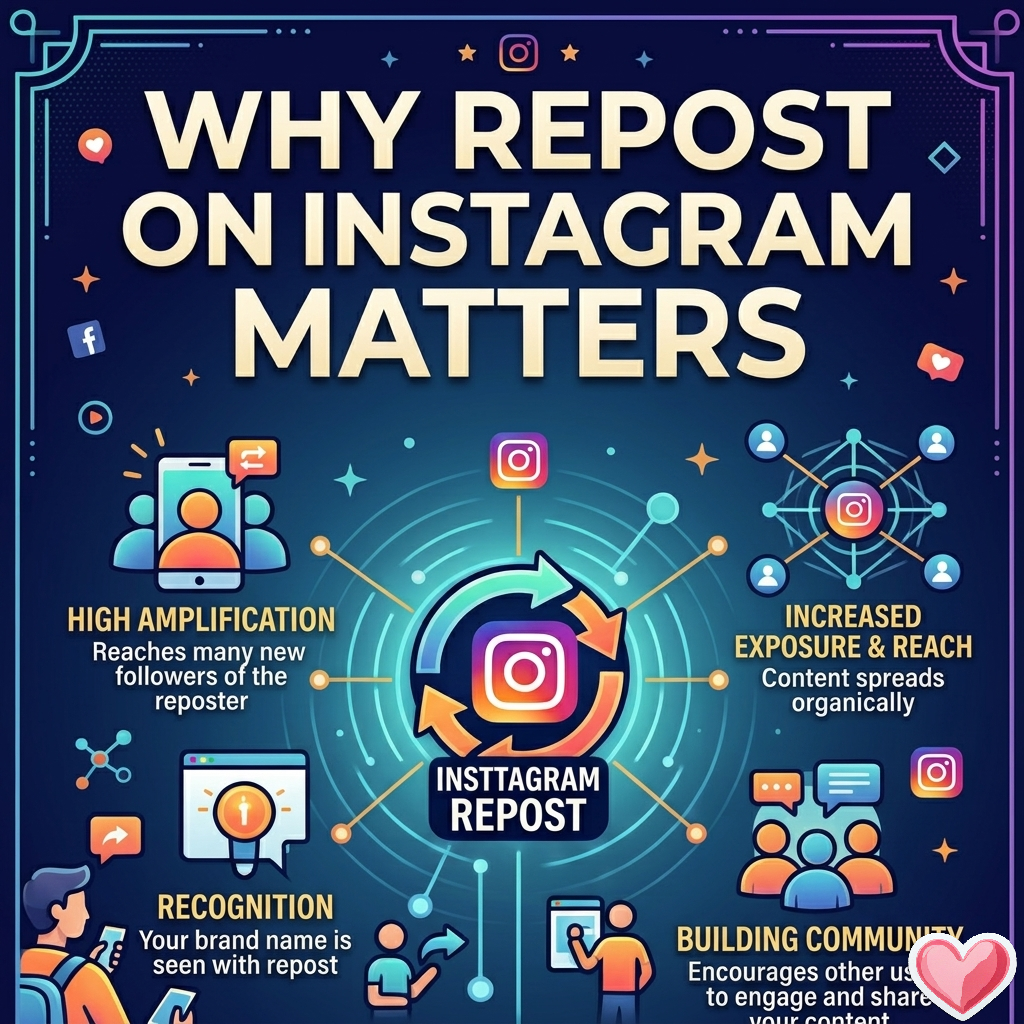
On Instagram, engagement is not a single metric—it’s a weighted system of signals that influence distribution in different ways. The confusion usually comes from how “repost,” “share,” and “save” are defined differently inside the platform versus how users talk about them.
Let’s break it down precisely.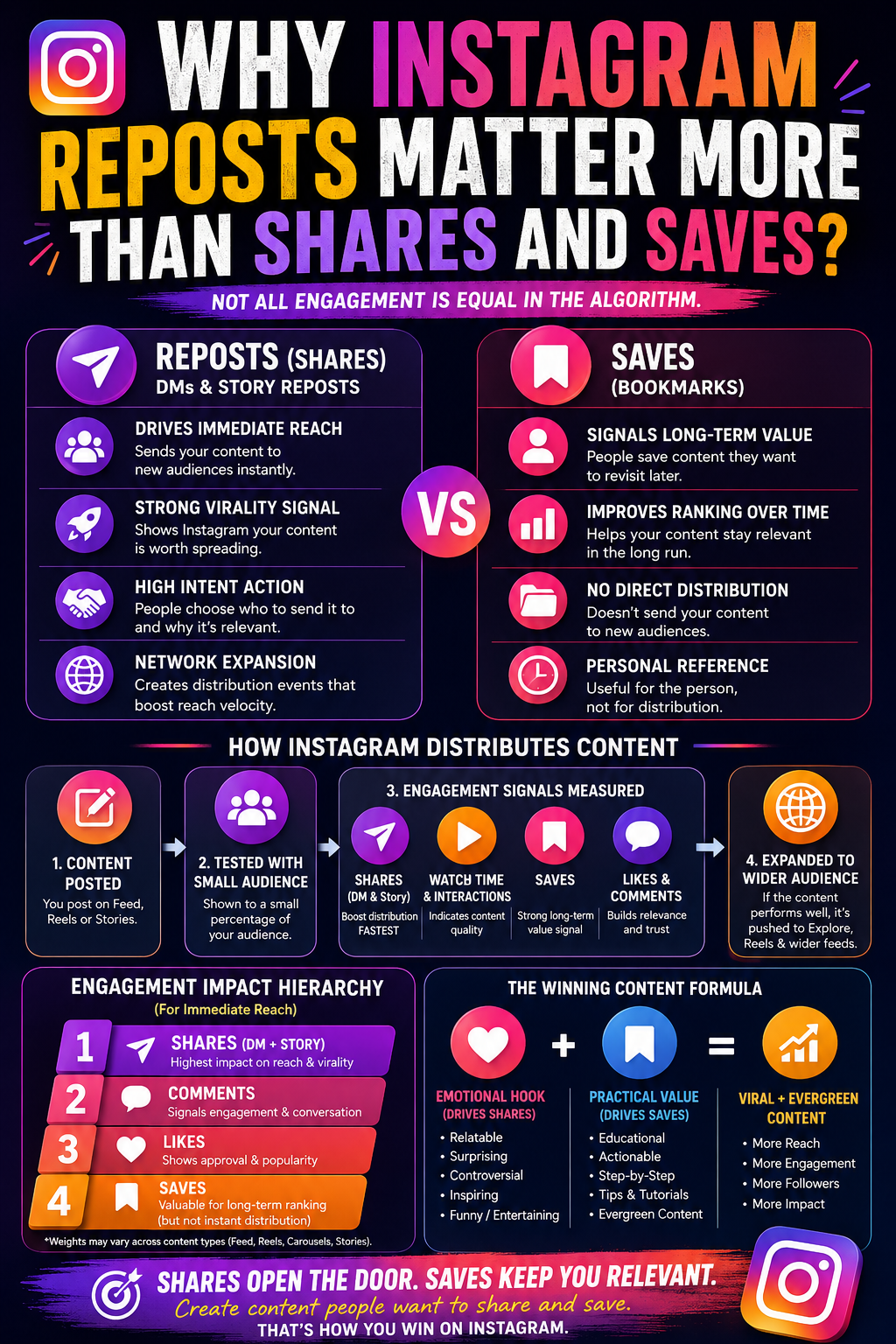
1. First: Instagram doesn’t treat all “engagement” equally
Instagram’s ranking systems (feed, Explore, Reels distribution) primarily optimize for prediction of value, not raw interaction counts. That means the algorithm tries to answer:
“Will this content be shown to someone else and lead to meaningful continued engagement?”
Different actions signal different types of value.
2. What “repost” actually means on Instagram
There are two common interpretations:
A. Native Instagram sharing (most important)
-
Sharing a post to:
- Stories
- Direct Messages (DMs)
B. External repost tools (less important)
- Third-party apps that repost content onto a feed again
In Instagram’s ranking logic, native shares (especially DMs and Stories) are what matter.
3. Why “reposts” (shares) can outperform saves and likes
If we interpret “repost” as sharing a post to others, it often carries more algorithmic weight because it indicates:
✔ Social endorsement
A share implies:
“This is worth another person’s attention.”
That is stronger than a save, which only implies:
“I personally find this useful.”
✔ Network expansion signal
Shares create distribution events:
- DM shares = private amplification
- Story shares = public amplification
This directly increases reach velocity.
✔ Higher intent action
Sharing requires an extra step of social judgment:
- Choosing who to send it to
- Choosing why it is relevant to them
That “intent layer” is highly predictive of content virality.
4. Where saves actually matter more than shares
Saves are still extremely important—but in a different way:
Saves signal:
- Long-term value
- Educational utility
- Reference content (guides, tips, tutorials)
They primarily influence:
- Future recommendations
- Content quality scoring over time
But they do not directly redistribute content to new audiences the way shares do.
5. The real hierarchy (simplified)
While Instagram does not publish exact weights, creator analytics and platform behavior strongly suggest:
For immediate reach (virality):
- Shares (DM + Story reposts)
- Comments
- Likes
- Saves
For long-term ranking:
- Saves
- Watch time (Reels)
- Replays
- Consistent engagement history
So both matter—but they optimize different outcomes.
6. Why people think “reposts matter more”
This belief comes from a real observation:
- Posts with high shares often go viral faster
- Saves alone rarely trigger sudden distribution spikes
- DM sharing is a strong “dark social” growth engine
So creators see correlation and assume dominance.
But the accurate view is:
Shares = distribution trigger
Saves = quality reinforcement
7. Practical implication for growth strategy
If your goal is growth on Instagram:
- Design for shares → emotional, relatable, surprising, controversial, or highly “sendable”
- Design for saves → educational, structured, evergreen, actionable
High-performing content usually does both:
- “Send this to your friend” (share trigger)
- “Save this for later” (utility trigger)
Bottom line
Reposts (shares) often feel more powerful because they directly expand reach across networks, which accelerates virality. Saves, however, strengthen long-term ranking and content authority.
The strongest Instagram content is not one that maximizes a single metric—but one that creates both redistribution (shares) and retention (saves) simultaneously.