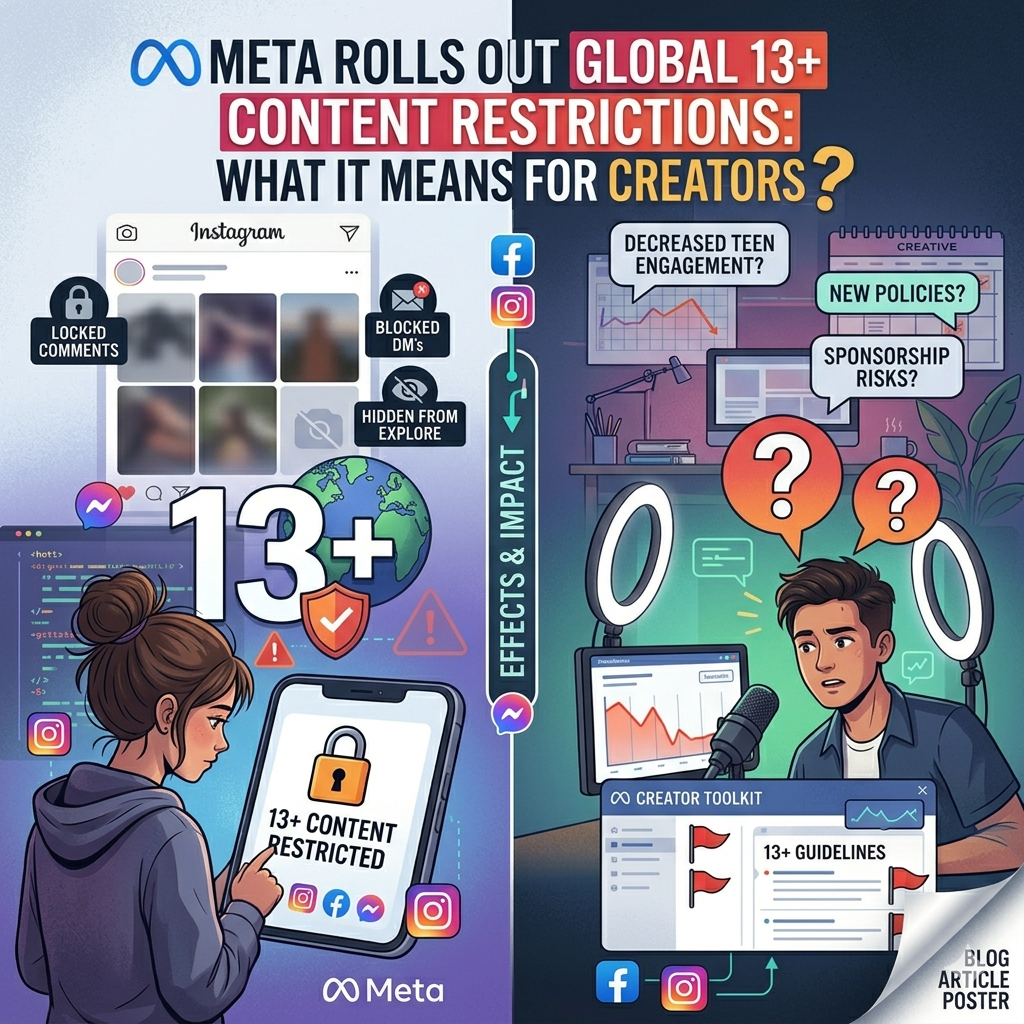
Meta is shaking up the digital landscape for younger users. The tech giant officially expanded its strict “13+” teen content settings globally across Instagram, Facebook, and Messenger.
First piloted in late 2025 across the US, UK, Canada, and Australia, this safety-first ecosystem is now a permanent, mandatory baseline worldwide for users under 18. Designed to mimic a movie ratings system (drawing structural inspiration from PG-13 guidelines), these settings are turned on by default.
While the move aims to satisfy regulators and ease parents' minds amidst global crackdowns on social media usage by minors, it introduces a major question for the digital economy: How does this global rollout affect content creators?
If you make a living or build an audience on Meta’s platforms, here is a deep dive into how these changes alter the algorithm, reach, and monetization.
1. The "Ghost Protocol" for Age-Inappropriate Accounts
The most immediate impact on creators is a shift in how Meta handles accounts that frequently push the boundaries of "teen-friendly" content.
Under the global 13+ restrictions, if Meta’s automated systems or human reviewers flag a Profile, Page, or Group as regularly sharing age-inappropriate content, that account becomes practically invisible to users under 18. * The Rules: Teens will no longer be able to follow these flagged creators.
The Blackout: Flagged creators will be blocked from appearing in teen search results, their comments will be hidden from teens across the app, and they won't even be able to exchange Direct Messages (DMs) with minor accounts.
The Creator Takeaway: If your brand relies heavily on edgy humor, mature themes, mild profanity, or aggressive stunts, a massive chunk of your Gen Z audience could disappear overnight.
2. A War on "Algorithmic Rabbit Holes" (Even Healthy Ones)
Creators in lifestyle, wellness, and fitness niches face a unique algorithmic hurdle.
Meta explicitly called out categories like nutrition, weightlifting, and coping with anxiety.
The Creator Takeaway: If you are a fitness coach or mental health creator, you may notice a dip in average view times or repetitive engagement from younger audiences. Your content isn't being banned; it’s being "spaced out" by the algorithm to ensure teens get a balanced digital diet.
3. The Redefinition of "Sensitive Content"
Previously, creators only had to worry about hard boundaries: explicit nudity, graphic violence, hate speech, or the promotion of regulated goods like tobacco and alcohol.
The 13+ classification expands the definition of "mature content" significantly. It now filters out:
Strong language / Profanity
Risky stunts or viral trends (Meta recently updated its policies to block viral trends like "car surfing" from teen feeds)
Marijuana paraphernalia or implied recreational substance use.
The Creator Takeaway: You may need to self-censor more heavily if you want to maintain a broad, multi-generational reach. Bleeping out swear words, avoiding dangerous-looking transitions or challenges, and keeping backdrops strictly PG-13 will become a necessity for mainstream distribution.
4. Brand Sponsorships and the "Safe Layer"
For creators who rely on brand deals, this change shifts how marketers plan campaigns. Brands targeting youth audiences will no longer just look at a creator's follower count; they will scrutinize whether the creator’s content fits within Meta's 13+ compliance box.
Advertisers are highly protective of brand safety. If a creator’s profile is on the border of being filtered out by teen settings, brands targeting families or young adults will likely pull back sponsorship dollars.
The Creator Takeaway: Clean, brand-safe creators are about to become much more valuable. If you can definitively prove your content clears Meta’s 13+ guidelines, you’ll be a hot commodity for agencies trying to navigate this new regulated environment.
5. Engagement Deprivation in "Limited Content" Mode
In addition to the default 13+ settings, Meta is launching an even stricter "Limited Content" mode worldwide later this year.
The Silver Lining: A Predictable Framework
While these changes introduce friction, they also offer a bit of clarity. For years, creators have complained about Meta’s "shadowbanning" and unpredictable algorithmic shifts. By explicitly aligning its guidelines with a standardized 13+ framework, Meta is giving creators a tangible rulebook.
If you want to maintain access to the under-18 demographic, the playbook is clear: treat your content like a PG-13 movie. If you choose to make content that is strictly for adults, accept that your youth reach will drop, but lean into the older demographic that holds the actual purchasing power anyway.
Ultimately, the creators who adapt their content strategy to align with these new algorithmic guardrails will thrive, while those who ignore the global shift may find themselves shouting into an empty digital room.