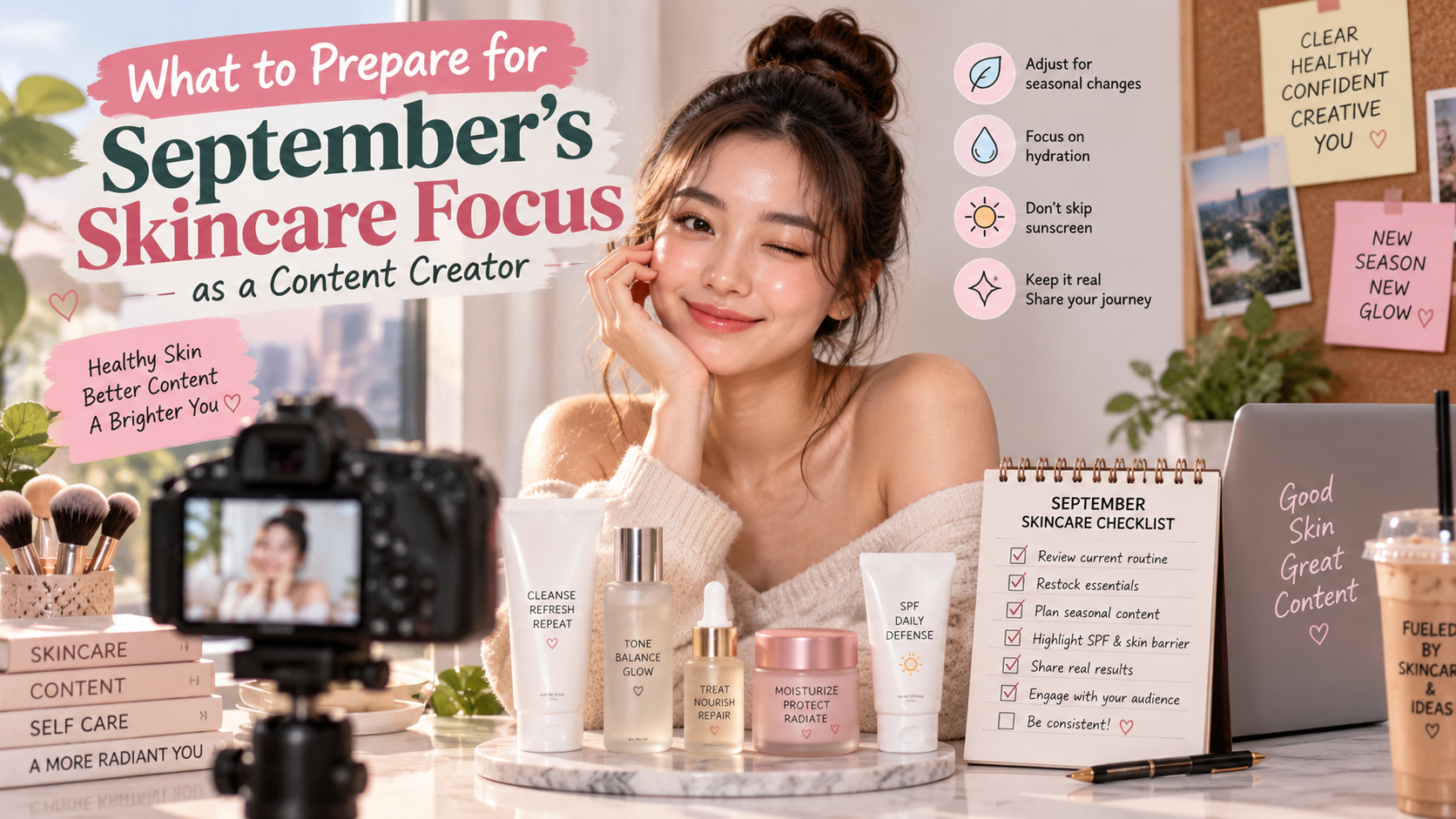
What to Prepare for September’s Skincare Focus as a Content Creator (2026)
September marks the transition from summer’s heat to autumn’s cooler, drier air. For content creators who appear on camera daily, that shift can affect skin texture, shine, and overall comfort. This guide walks creators aged 25‑50 through the practical steps needed to keep skin camera‑ready, from routine tweaks to lighting considerations.
1. Audit Your Current Routine
Before you add or remove products, take a quick inventory:
- What you cleanse with
- Serums and actives in use
- Moisturizer type (gel, cream, lotion)
- Sunscreen SPF and formulation
Note any products that feel heavy, cause breakouts, or leave a film that catches studio lights. This audit forms the baseline for September adjustments.
2. Adjust Cleansing for Cooler Weather
Summer cleansers often focus on oil control. In September, opt for a gentle, pH‑balanced cleanser that removes residual sunscreen without stripping the skin barrier. Look for ingredients like glycerin or panthenol that maintain moisture.
When to switch
If you notice tightness after cleansing, replace your foaming formula with a creamy or gel‑based cleanser. Keep the routine to once or twice daily—over‑cleansing can trigger excess oil production when the air dries out.
3. Boost Barrier Repair
Dry air and indoor heating can compromise the lipid barrier, leading to flakiness and irritation. Incorporate a barrier‑repair serum or cream containing ceramides, niacinamide, or squalane. Apply it after serums and before moisturizer.
Layering tip
Use the “sandwich” method: serum → barrier repair → moisturizer. This locks in actives while sealing moisture.
4. Re‑evaluate Sun Protection
Even though the sun feels milder, UV‑A and UV‑B rays remain strong, especially for indoor lighting that can reflect off windows. Keep a broad‑spectrum SPF 30‑50 sunscreen in your kit. Choose a lightweight, non‑shiny formula that doesn’t flash on camera.
Studio‑friendly options
Mineral sunscreens with zinc oxide often leave a matte finish, while tinted chemical sunscreens double as a light base for makeup.
5. Hydration Strategy for On‑Camera Days
Hydrated skin reflects light more evenly, reducing the need for heavy foundation. Adopt a two‑step hydration plan:
- Morning: Drink at least 500 ml of water and apply a hyaluronic‑acid serum (1‑2 % concentration) on damp skin.
- During shoots: Keep a mist bottle with rose water or a light glycerin spray handy for quick refreshes.
Avoid caffeine spikes right before filming; they can dehydrate skin temporarily.
6. Product Picks for September 2026
Here are budget‑friendly yet effective options that align with the above principles:
- Cleanser: CeraVe Hydrating Cleanser – gentle, ceramide‑rich.
- Serum: The Ordinary Niacinamide 10% + Zinc 1% – balances oil and strengthens barrier.
- Barrier Cream: La Roche‑Posay Cicaplast Baume B5 – contains panthenol and madecassoside.
- Sunscreen: EltaMD UV Clear SPF 46 – lightweight, non‑comedogenic.
- Hydration Mist: Heritage Store Rosewater Facial Mist – alcohol‑free.
7. Lighting and Makeup Considerations
Skincare isn’t the only factor; lighting can amplify texture. Use diffused softbox lights to minimize harsh shadows. When applying makeup, opt for a dewy foundation that works with your moisturized skin rather than heavy matte formulas that can cake.
Quick prep checklist
- Cleanse → Serum → Barrier Cream → Moisturizer → Sunscreen
- Apply a thin primer that contains silicone for a smooth surface.
- Set with a light translucent powder only on T‑zone if shine becomes an issue.
8. Schedule Your Skincare Routine Around Content Production
Plan your most intensive skincare steps (exfoliation, mask treatments) on days without filming. This prevents temporary redness or flaking from appearing on camera.
Sample weekly schedule
- Monday‑Wednesday: Regular routine (no exfoliation).
- Thursday: Light chemical exfoliant (AHA 5 %) – rinse thoroughly, no filming that evening.
- Friday‑Sunday: Filming days – stick to gentle routine.
9. DIY Seasonal Face Masks (Optional)
If you enjoy hands‑on skincare, try a simple September mask using ingredients you likely have:
- Oatmeal‑Honey Soother: 1 tbsp finely ground oats + 1 tbsp raw honey. Apply for 10 minutes, rinse with warm water. Calms irritation from indoor heating.
- Pumpkin‑Vitamin C Brightener: 2 tbsp pure pumpkin puree + ½ tsp vitamin C powder. Leave for 5 minutes, rinse. Provides antioxidant boost for dull post‑summer skin.
Use masks only on non‑shoot days to avoid temporary redness.
10. Frequently Asked Questions
Q: Should I keep using my summer sunscreen?
A: Yes, but switch to a formula that feels lighter under studio lights. Mineral options often reduce flash.
Q: Is it okay to layer multiple serums?
A: Only if the actives are compatible. Pairing niacinamide with hyaluronic acid is safe; avoid stacking strong acids (AHA + BHA) on the same day.
Q: How often can I exfoliate before a shoot?
A: Limit chemical exfoliation to once a week and schedule it at least 48 hours before filming to allow skin to recover.
Q: Do I need a different moisturizer for indoor shoots?
A: Choose a moisturizer with a slightly richer texture than your summer gel, but still non‑greasy. Look for ingredients like ceramides and squalane.
Q: Can I rely on diet alone for skin health?
A: Nutrition supports skin, but topical barrier repair and proper hydration remain essential, especially under studio lighting.
By following these steps, you’ll transition smoothly into September’s skincare focus, ensuring your skin looks fresh, balanced, and ready for any on‑camera moment.