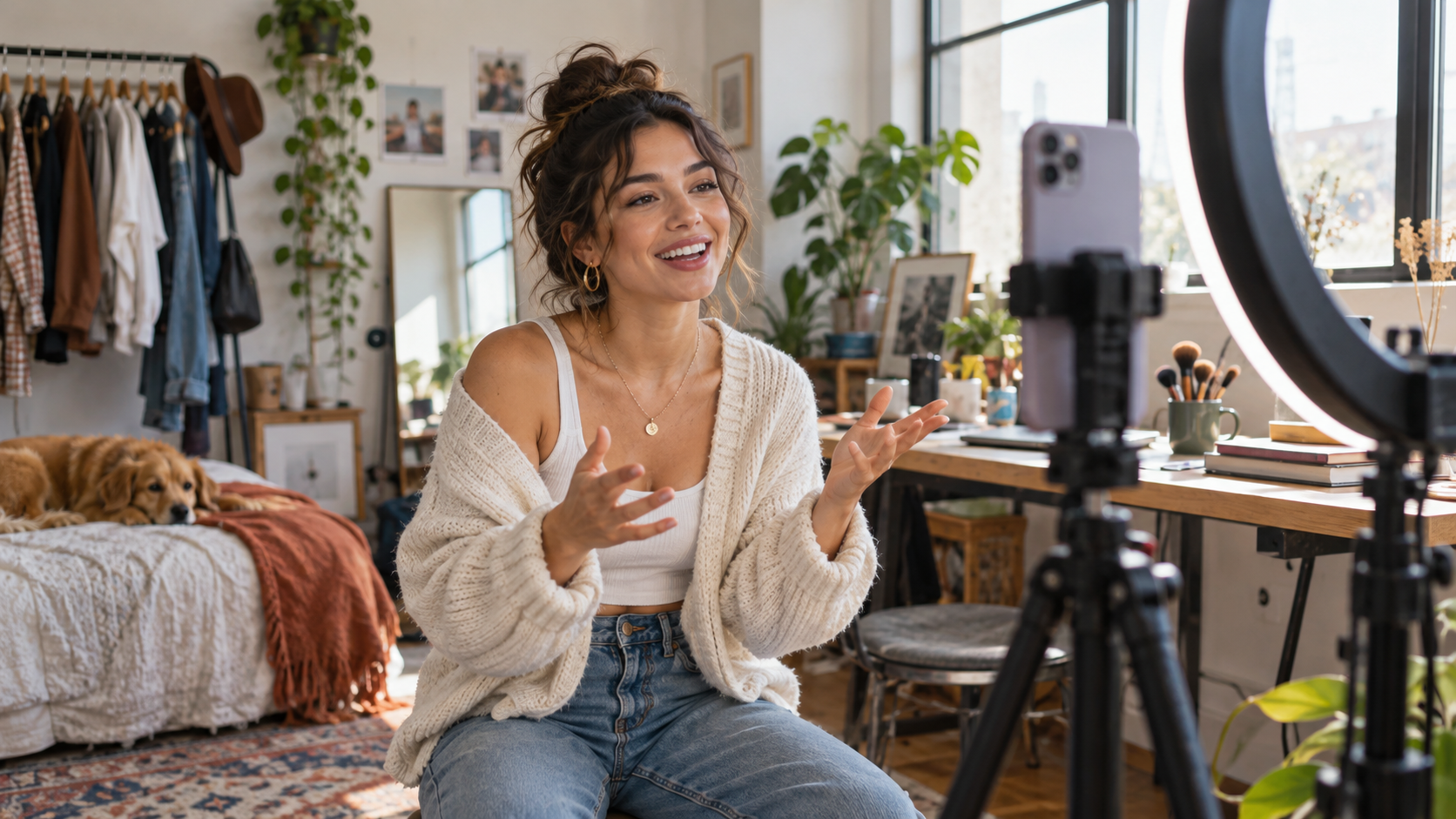
Cover: AI-generated editorial illustration.
A finished product tells viewers what you sell. A useful process video answers the questions that make someone consider buying it. TikTok’s Next 2026 trend report identifies Reali-Tea as a cultural theme around honesty, community and shared experience. Treat that forecast as a reason to test a specific story with your audience.
Choose one question you can demonstrate
Review recent customer comments or enquiries. Choose a question with a visible answer: how a ceramic mug is inspected, how you pack a fragile order, or what happens when a handmade product fails a quality check. Avoid presenting a hypothetical process as footage of your actual business. Show work you genuinely do and get permission before including customers, colleagues or private workspaces.
Build a three-part story
- Question: Open with the exact problem the viewer wants answered.
- Evidence: Film the step, material or decision that answers it. Show a close-up and explain why it matters.
- Invitation: Ask what detail the viewer would like to understand next.
For a ceramic maker, that could be: “How do we check a handle before shipping?” Show the actual inspection, explain the criteria, then ask which production step viewers want to see. Avoid claims about safety or durability that your demonstration cannot establish.
A practical shot list
- One establishing view of the workspace.
- A close-up of the relevant tool or material.
- The process in action, with accurate captions.
- A comparison that explains the decision.
- A short final answer and a relevant follow-up question.
Use a length that lets you answer clearly. There is no guaranteed duration, hashtag or posting schedule that makes this theme perform. If the post promotes a paid partnership, use the platform’s applicable disclosure controls and check the rules that apply to your market.
Run the two-week experiment
Publish a small series you can realistically produce, such as four videos answering four related questions. Keep a record of dates, topics and any promotion. Compare each video with recent content of a similar length and purpose, using metrics available in your account. Two weeks is a planning window, not proof that you have enough data for a reliable conclusion.
| Record | What it helps you assess |
|---|---|
| Views and reach, where available | Exposure, using the platform’s definitions |
| Watch time or completion, where available | Whether viewers stayed for the answer |
| Questions and substantive replies, manually counted | Whether the story prompted useful discussion |
| Relevant enquiries or tracked clicks | Whether attention led to your chosen next step |
Decide what to change
If viewers repeatedly ask the same question, clarify the opening. If discussion is useful but few people finish, shorten the explanation while retaining the evidence. If a video reaches more people but produces fewer relevant enquiries, reconsider its audience fit. Record observations without claiming that the content format caused every change: timing, audience mix and other posts can also affect results.
The next experiment should follow what your audience actually needed. For broader planning, connect these findings to your campaign measurement workflow, while keeping the process series focused on customer questions.