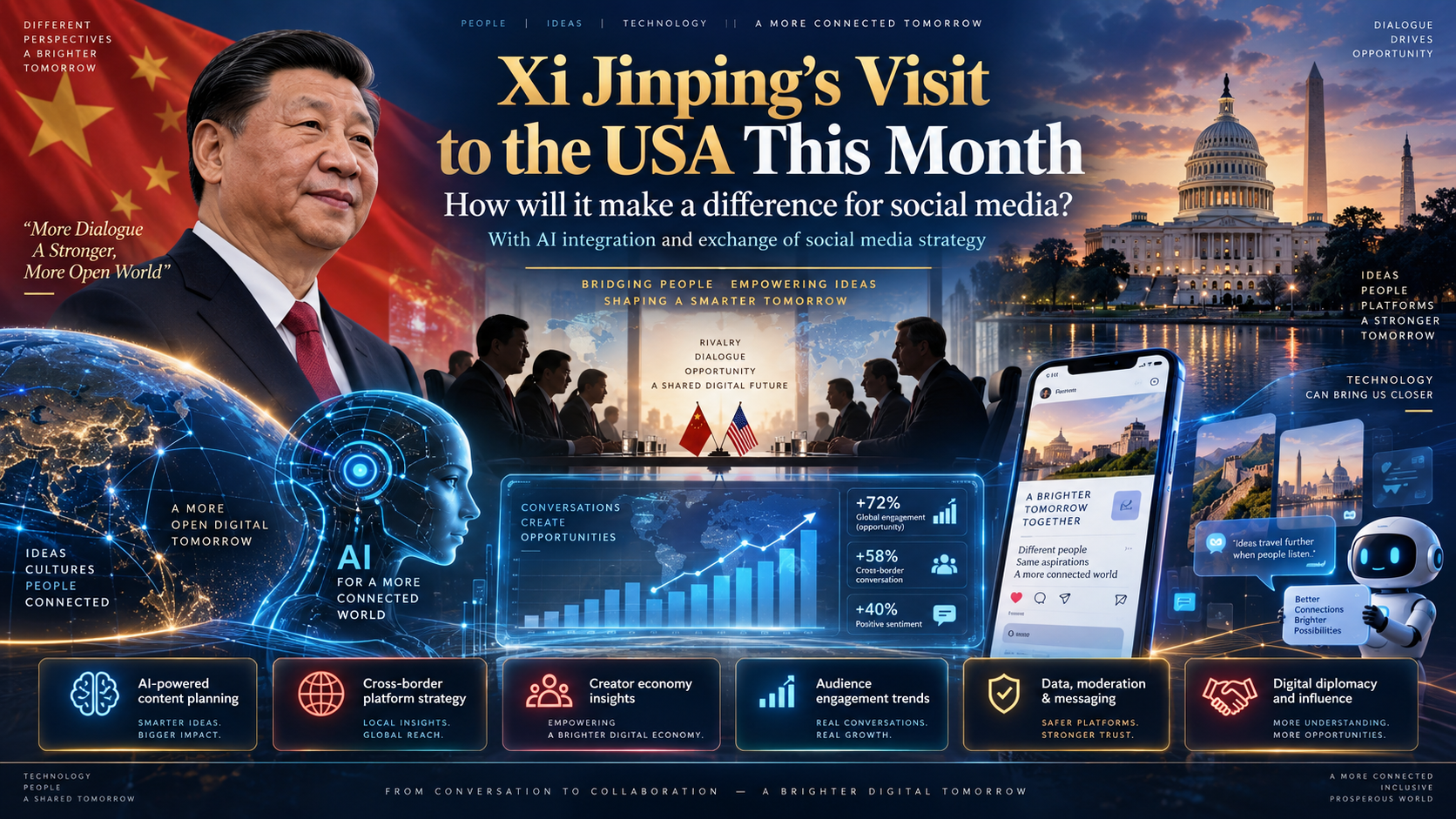
Xi Jinping’s U.S. Visit: Implications for Social Media in 2026
Overview of the Visit
In September 2026, Chinese President Xi Jinping arrived in Washington for a series of high‑level meetings that include discussions on trade, technology, and climate cooperation. While the diplomatic agenda dominates headlines, the presence of a world leader in the United States inevitably triggers a wave of conversation across every major social platform.
For digital marketers, the visit is more than a news item; it is a catalyst that can shift audience sentiment, platform moderation policies, and the competitive landscape for brands that operate in both markets.
Immediate Reactions on Platforms
Real‑time Engagement
Twitter‑style micro‑blogs, short‑form video apps, and community forums light up within minutes of the announcement. Hashtags combining the leader’s name with U.S. city tags trend globally, and users begin to share live‑stream clips, photo‑journalistic updates, and opinion pieces.
Marketers can monitor these spikes to gauge the tone of conversation—whether it leans toward optimism about cooperation or concern over geopolitical tension. The speed of the reaction also highlights the importance of having a real‑time listening setup.
Content Localization
English‑speaking audiences focus on policy implications, while Chinese‑language feeds discuss national pride and diplomatic nuance. Brands with bilingual followings should prepare parallel messaging that respects cultural context while staying on brand.
Long‑Term Shifts in Policy and Platform Governance
Data Privacy and Cross‑Border Flow
Both the United States and China have been revisiting data‑transfer frameworks. A high‑profile visit can accelerate negotiations, leading to clearer guidelines for how user data moves between platforms headquartered in each country.
Marketers need to audit their data‑collection practices now, ensuring that any cross‑border analytics comply with emerging standards. This proactive stance reduces the risk of sudden compliance roadblocks.
Influencer Landscape
Influencers who operate across the Pacific often act as cultural bridges. After the visit, platforms may adjust verification processes or algorithmic weighting for creators who discuss political topics, aiming to balance free expression with misinformation controls.
Brands should review their influencer contracts to include clauses that address potential content‑moderation changes, protecting both parties from unexpected takedowns.
Practical Guidance for Marketers
Monitoring Signals
Set up keyword alerts for combinations like “Xi Jinping USA,” “China‑US tech talks,” and platform‑specific tags. Use sentiment analysis tools to track shifts in positive versus negative mentions over 24‑hour cycles.
Identify which regions show the strongest engagement spikes and allocate budget accordingly. For example, a surge in U.S. Midwest discussions may warrant localized ad creative that references the visit’s economic themes.
Crafting Responsive Campaigns
Develop modular content assets that can be quickly repurposed. A short video explaining the visit’s relevance to your product line can be swapped into existing ad rotations without a full production cycle.
Maintain a tone that is factual and respectful. Avoid overt political positioning unless your brand has a clear stance that aligns with its core values and audience expectations.
Frequently Asked Questions
Will platform algorithms change after the visit?
Platforms regularly update their moderation models, especially after high‑visibility political events. While no specific algorithmic overhaul is guaranteed, expect tighter scrutiny of political content and faster response times to reported misinformation.
How can I protect my brand from unintended political association?
Implement a review workflow that flags any user‑generated content mentioning the visit before it appears in paid placements. Use geo‑targeting to limit exposure in regions where the conversation may be more volatile.
Is it advisable to launch a new product during this period?
Launching a product that ties into themes of cooperation, technology, or sustainability can benefit from the heightened attention. However, ensure the messaging does not appear to exploit the political moment.