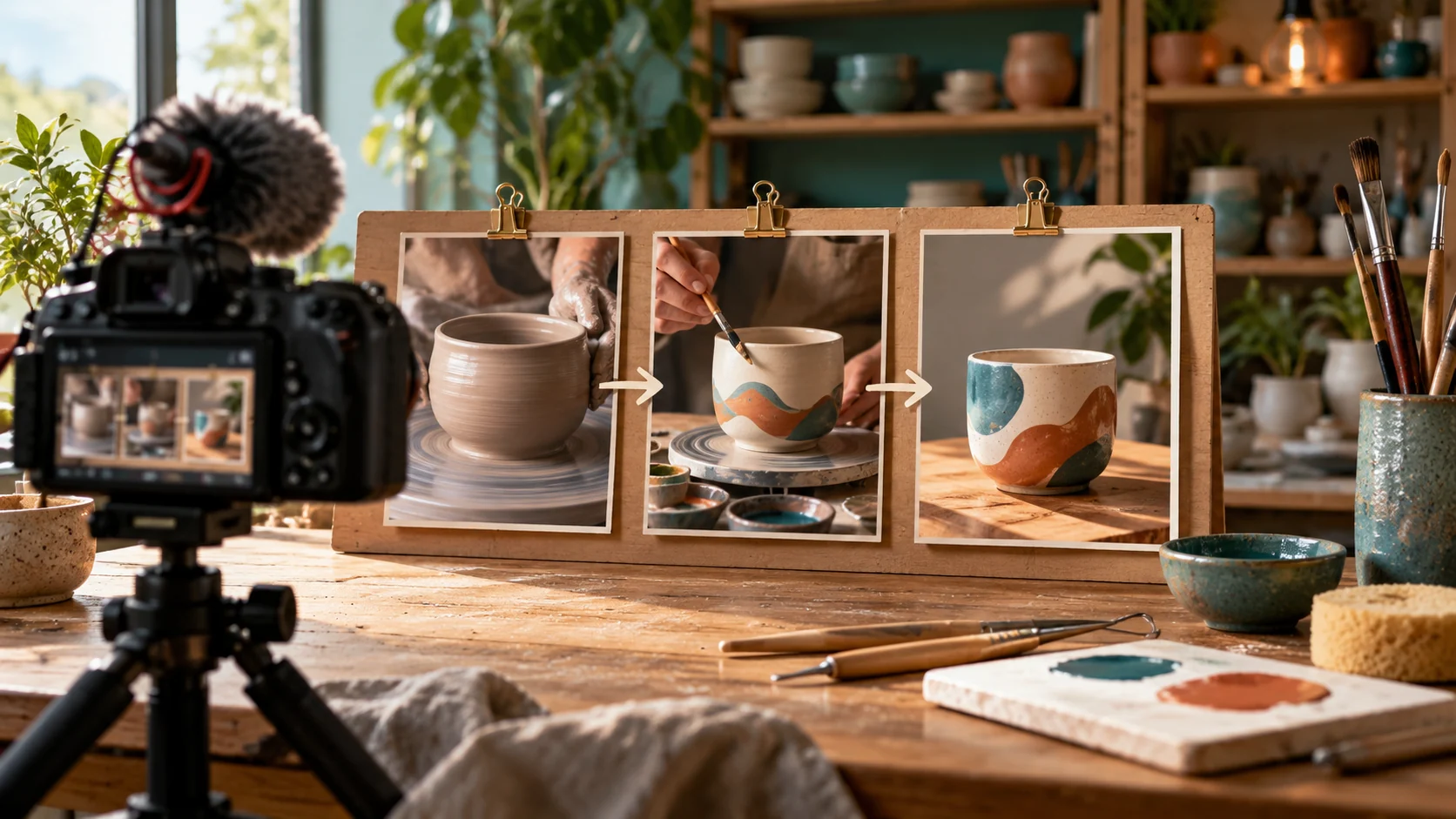
A strong YouTube Shorts series gives people a reason to return without making a new viewer feel late to the story. Each episode should deliver something worthwhile on its own while advancing a recognizable larger idea.
At Made On YouTube 2026, YouTube described Shorts series organized into seasons and episodes. That makes episodic planning a timely topic for creators. Check which series controls are available on your account before designing a workflow around a particular interface. YouTube’s official event FAQ describes the feature.
Start with a promise that can support several episodes
“Daily videos” describes a schedule, not a reason to watch. “Making one ceramic cup from raw clay to the first pour” is a story with visible progress. “Three ways to improve a small product shoot” is a useful teaching sequence.
Choose a promise you can fulfil with footage, access and time you already have. Avoid announcing a long season before you have tested whether the idea supports more than one interesting episode. A three-part pilot is usually easier to complete and assess than an ambitious daily commitment.
Give each episode its own question and payoff
Use a compact outline before filming. The following pottery example is an editorial planning model, not a claim about a particular channel’s results.
- Episode one: the starting problem. Show the design and demonstrate the shaping decision. End with a finished shape, not a missing explanation.
- Episode two: the meaningful choice. Compare two glaze samples and explain the reason for the selection. Deliver a clear choice within the episode.
- Episode three: the result. Reveal the finished cup, discuss what worked and show one thing you would change next time.
The connecting thread is the cup. The individual value is the decision explained in each video. A viewer who discovers episode two first should still understand what is happening.
Make recognition easy without a long introduction
Keep the visual identity consistent: a related opening image, a short recurring series name and similar cover treatment. Use episode labels as navigation, while allowing the main title to explain the specific benefit or event.
For example, a title built around “Choosing the glaze for this handmade cup” gives more context than “Part 2.” Keep any necessary recap brief and visual. Repeating a lengthy introduction can consume the time available for the actual story.
Plan the handoff to the next episode honestly
A good closing can mention the next relevant question after resolving the current one. “Next, I’ll show how the glaze changes in the kiln” is a genuine continuation. An artificial cliffhanger that withholds the answer promised in the title is more likely to frustrate someone who came for that answer.
Use available series or channel navigation to help interested viewers continue. Do not promise that organizing episodes automatically increases distribution. The organization supports the viewing experience; it does not establish a guaranteed ranking advantage.
Produce the pilot as one manageable project
Capture reusable setup footage once, but give every episode a distinct action or decision. Keep a shot list, track which clips you have recorded and leave room for a natural update when the project changes.
Draft the pilot with the content idea generator and reserve filming and review dates in your planning notes alongside the Creator Calendar. The calendar can suggest relevant occasions; the series still needs a reason to exist beyond the date.
Review the whole viewing journey
After comparable observation windows, review the available retention, comments and returning-viewer information. Look for confusing openings, repetitive episodes and questions that deserve another explanation. Do not judge the whole series by one unusually strong or weak upload.
Decide whether to continue, adjust the premise or end the pilot. A short completed series with a useful result is a better foundation than an abandoned season with no resolution.
Frequently asked questions
Does every episode need to be watched in order?
No. Design for both returning viewers and people arriving through a single Short. Supply enough context for either viewer.
How many episodes should a first series have?
Start with the number needed to fulfil the promise. Three is a practical pilot suggestion, not a platform requirement.
Editorial guide reviewed 28 October 2026. Cover image: original AI-generated editorial illustration.