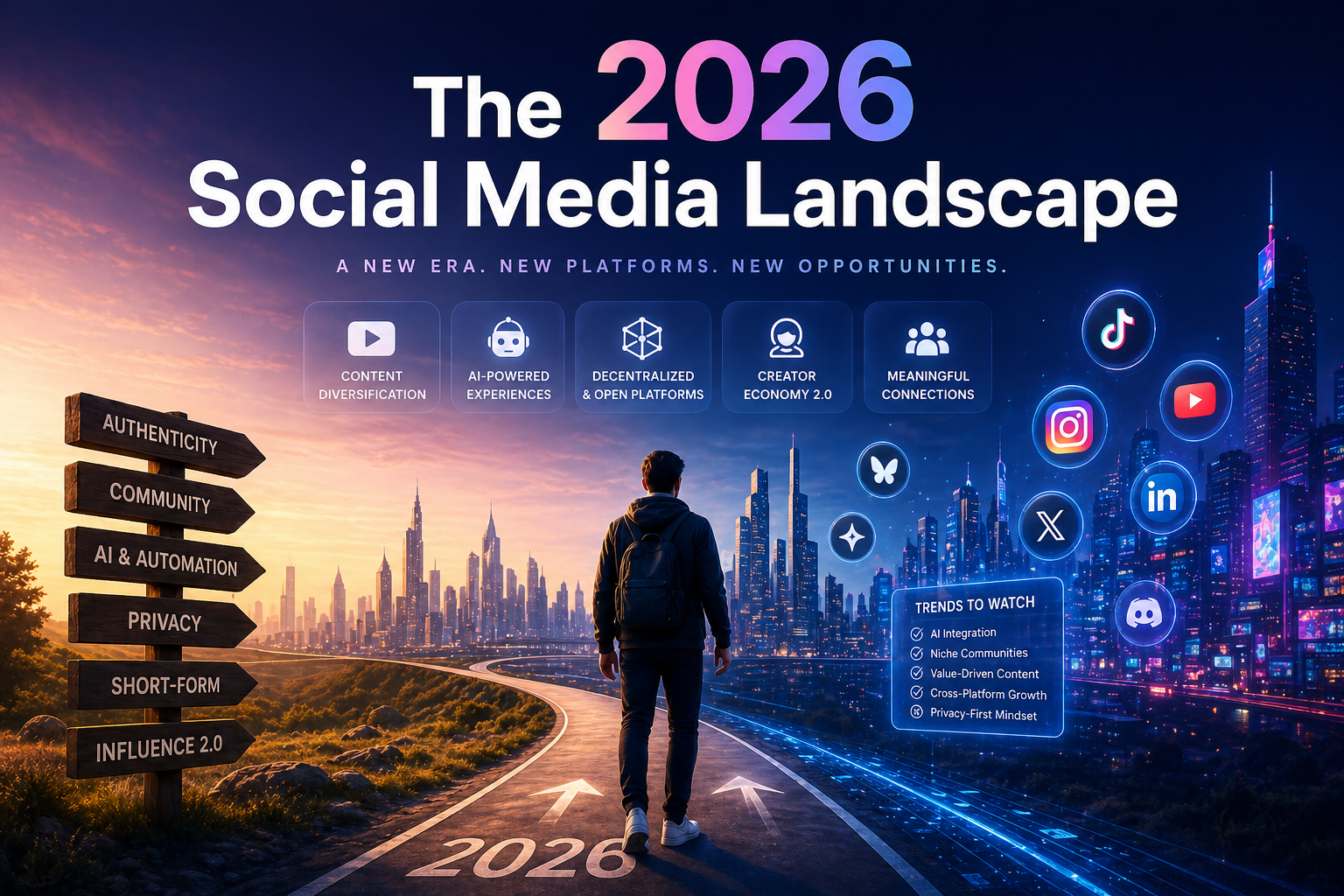
The social media landscape has officially moved past the "town square" era.
From the absurdist humor of Gen Alpha to the clinical precision of multi-modal search, here are the dominant trends reshaping how we connect, create, and consume.
1. The Cultural Pulse: From Chaos to Coziness
Content norms are currently being pulled in two opposite directions: high-energy chaos and low-stakes comfort.
The Chaos Culture Trend: Gen Alpha (and the younger edge of Gen Z) has pioneered a "nonsensical" aesthetic.
Characterized by rapid-fire editing, inside-joke memes, and a rejection of traditional narrative structures, this trend values raw energy over production value. The Cozy Aesthetic Trend: As an antidote to digital overstimulation, "frugal optimism" and slow-living content are surging.
Think "quiet" vlogs, lo-fi soundtracks, and content that celebrates the mundane, offering users a digital sanctuary from the noise. The Nostalgic Remix: While Gen Alpha looks forward to chaos, older generations are looking back.
Throwbacks to the '70s and '80s—reimagined through modern filters and sounds—are bridging the gap with the highest-spending demographics. The Micro-Drama Trend: We’ve seen the "death" of traditional TV for younger audiences. In its place are social-first series—tightly scripted, multi-part dramas optimized for vertical viewing and "clipping."
2. The Tech & Algorithm Shift: Nuance and Speed
Algorithms are no longer just guessing what you like; they are analyzing how you behave within a single frame of video.
The Micro-Behavior Trend: Platforms now use nuanced data—like how long you hovered over a specific comment or whether you rewatched a three-second loop—to calibrate your feed with terrifying accuracy.
The Rapid-Response (Fastvertising) Trend: The traditional content calendar is dead. Brands are moving toward "Fastvertising," where they use AI to identify a viral moment and produce a relevant ad or post within hours, not weeks.
Search-First Social: Social media is the new Google. Users are bypassing traditional search engines for TikTok and Instagram.
This has led to Multi-Modal Discovery, where content is optimized for voice commands, image recognition, and even "vibes" (visual aesthetics).
3. The Trust Architecture: Humans vs. Machines
As AI-generated content becomes "table stakes," the value of a verified human face has skyrocketed.
The Authenticity Paradox: AI tools are everywhere, but human-made "imperfections" are the new luxury.
Successful brands are intentionally leaving in "stutters" or unpolished moments to prove a human was behind the camera. Employee Advocacy: Audiences trust employees more than CEOs or official brand handles.
We are seeing a massive shift toward "Employee-Generated Content" (EGC), where the people behind the product become the faces of the brand. The Performance Partnership: The era of "paying for a post" is over. Creator-brand relationships are shifting to an ROI-focused model, prioritizing long-term partnerships and "humanized" branding over one-off sponsored clips.
4. The Platform Evolution: Where We Hang Out
The "where" of social media is changing as much as the "what."
| Trend | Platform Evolution |
| LinkedIn’s Creative Era | LinkedIn has shed its "stiff suit" image, becoming a hub for high-quality video creators and personal storytelling. |
| The Side Quest | Users are fragmenting their identities; they might be professional on LinkedIn, a chaotic memer on TikTok, and a niche hobbyist on Discord. |
| Substack as Social | Newsletters are no longer just emails; they’ve evolved into social networks where deep-dive discussions happen away from the algorithmic noise. |
Summary: The New Rulebook
To survive in the 2026 social ecosystem, the strategy is simple but difficult: Be faster than the trend, more human than the AI, and easier to find than the competition. Whether you are leaning into the "Chaos Culture" or building a "Cozy Aesthetic," the goal is to stop the scroll by offering something that feels earned, not just generated.