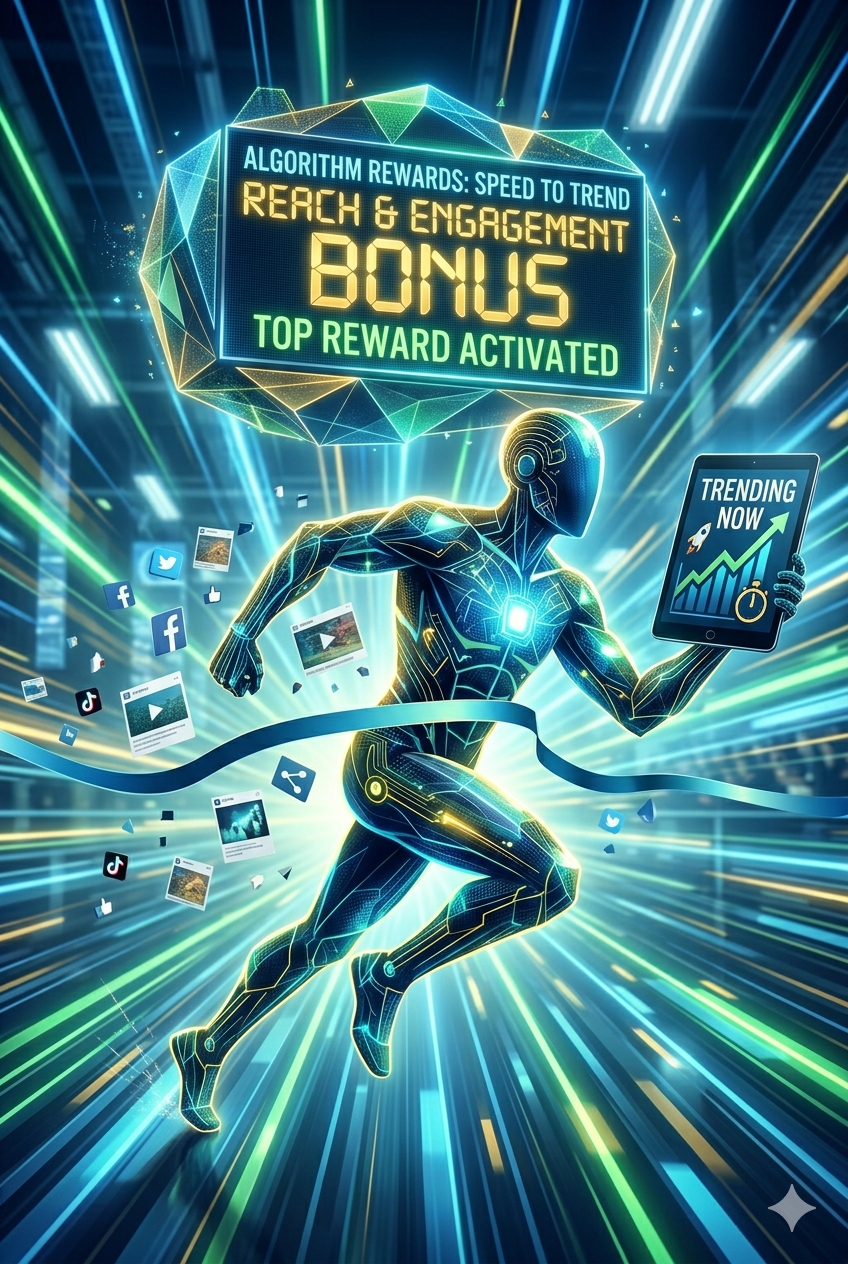
Algorithms Reward Fast Reaction to Trends: The Speed of Content
In the current digital landscape, the phrase "content is king" has been superseded by a new reality: Timing is everything. Whether you are a brand, a journalist, or an independent creator, the algorithms governing TikTok, Instagram, X (Twitter), and even Google are increasingly biased toward one specific metric: Velocity.
If you aren't reacting to a trend while it is still on the upward curve, you are effectively invisible. Here is why modern algorithms reward speed and how you can capitalize on it.
1. The "Information Vacuum" and First-Mover Advantage
When a major news event occurs or a new meme goes viral, there is a sudden, massive spike in search queries and hashtag usage. For a brief window, there is more demand for information than there is supply.
Algorithms are programmed to fill this "information vacuum" immediately. If you are among the first to publish high-quality content on a trending topic, the algorithm will prioritize your post simply because it is the most relevant, fresh data point available. This "first-mover" advantage can propel a small account into the feeds of millions before the market becomes saturated by larger competitors.
2. The QDF Factor (Query Deserves Freshness)
Google has long utilized a ranking signal known as QDF (Query Deserves Freshness). For topics that are consistently stable (like "how to boil an egg"), Google prioritizes established authority. However, for topics that are "hot" (like "breaking tech news" or "awards show results"), the algorithm temporarily ignores traditional authority scores in favor of the most recent updates.
By reacting quickly, you bypass the usual months of SEO "climbing" and land on the first page of search results instantly.
3. The Engagement Flywheel
Algorithms don't just look at what you posted; they look at how people interact with it in the first few minutes. Trending topics have a built-in audience of "high-intent" users—people who are actively looking to discuss, share, or learn about that specific thing right now.
When you post about a trend while it’s peaking, your initial engagement rate (likes, comments, shares) is naturally higher. This surge signals to the algorithm that your content is "high-value," which triggers a secondary wave of distribution to a broader, non-trending audience.
4. Shortened Content Life Cycles
A decade ago, a blog post could remain "trending" for weeks. Today, the life cycle of a TikTok sound or a Twitter controversy is often measured in hours. Algorithms have adapted to this by creating "fast-burn" distribution models. If you wait 48 hours to jump on a trend, the algorithm has likely already moved on to the next topic, and your content will be buried regardless of its quality.
How to Build a "High-Velocity" Content Strategy
To win the race against the algorithm, you need to shift from a "perfectionist" mindset to an "agile" one:
Social Listening: Monitor tools like Google Trends, TikTok Creative Center, or X’s "What’s Happening" section daily.
Templatize Your Assets: Have your brand colors, fonts, and video layouts ready in advance. When a trend hits, you should only need to swap out the text or the footage.
Don’t Overthink Quality: In the world of trend-jacking, a "good" video posted today is worth ten "perfect" videos posted next week.
Conclusion
The digital world no longer rewards the most polished content; it rewards the most relevant content. By aligning your production speed with the algorithm’s need for freshness, you can turn temporary trends into permanent growth. In the race for attention, the fast don't just win—they get seen.